Symptom Guide
Root-cause analysis and resolution paths for the operational symptoms fleet operators see most often — derate, regen failures, EGR cooler issues, crankcase pressure faults, and cold-weather operational patterns.
8 Diagnostic Patterns
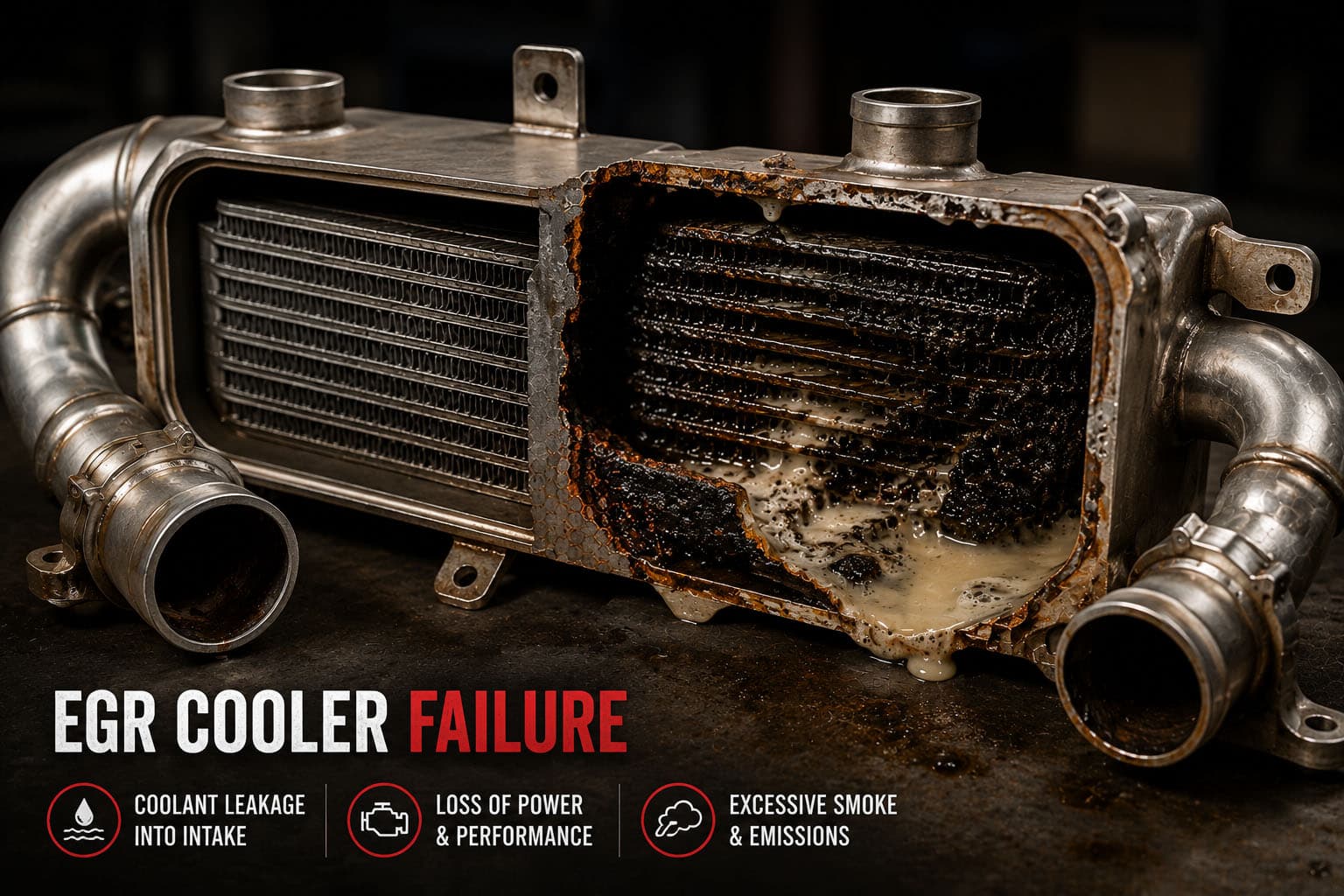
EGR Cooler Failure
The EGR cooler develops internal leaks, allowing engine coolant to enter the intake manifold and combustion chambers. Symptoms include white exhaust, coolant loss, low coolant warnings, and eventually catastrophic engine damage if untreated.
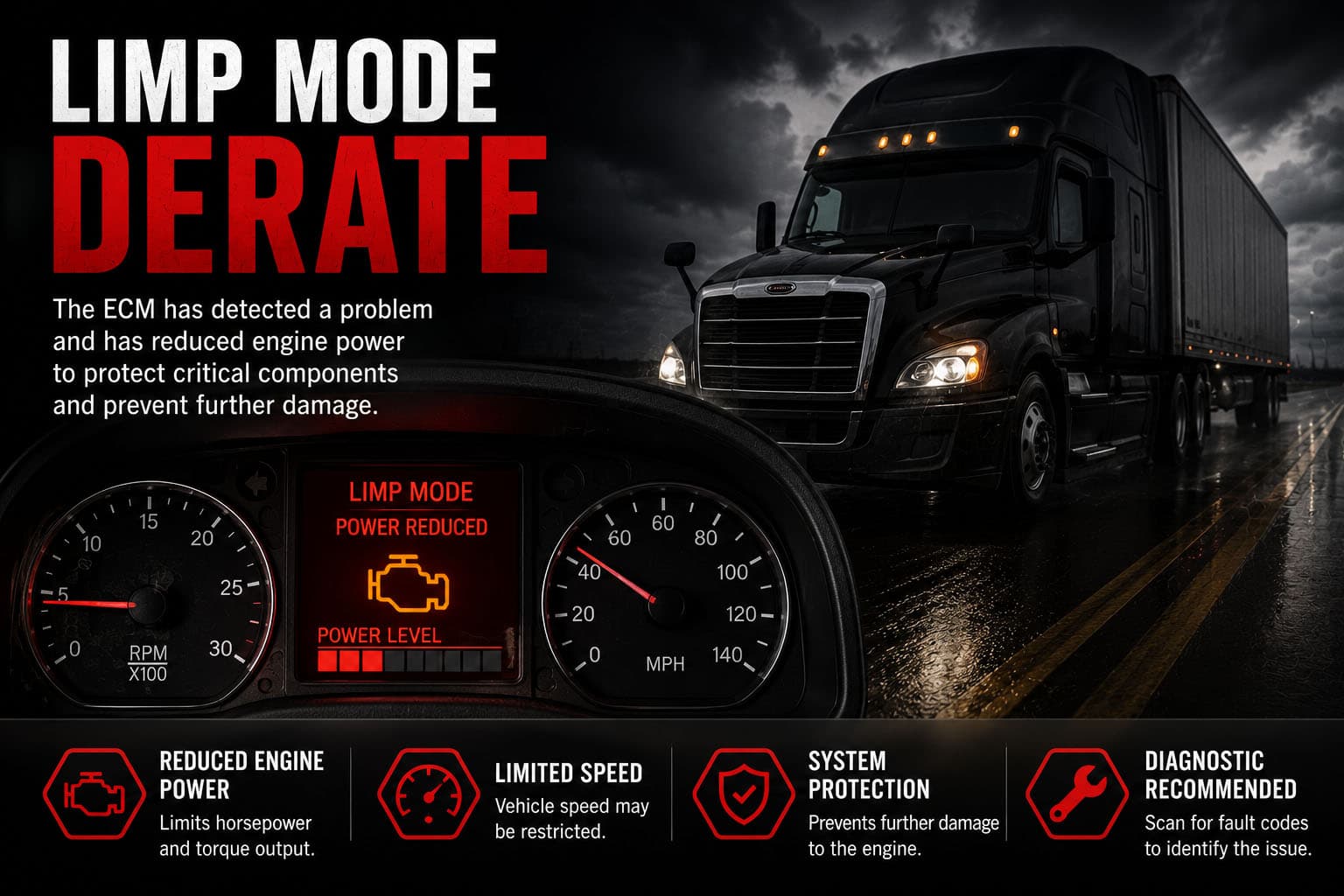
Limp Mode / Derate
Engine cuts power to a fraction of normal output — typically 50–70% torque limited, sometimes 5 mph maximum. The truck is still running but can't perform the work. Drivers know it as "derate," "reduced power mode," "engine protection," or "limp home."
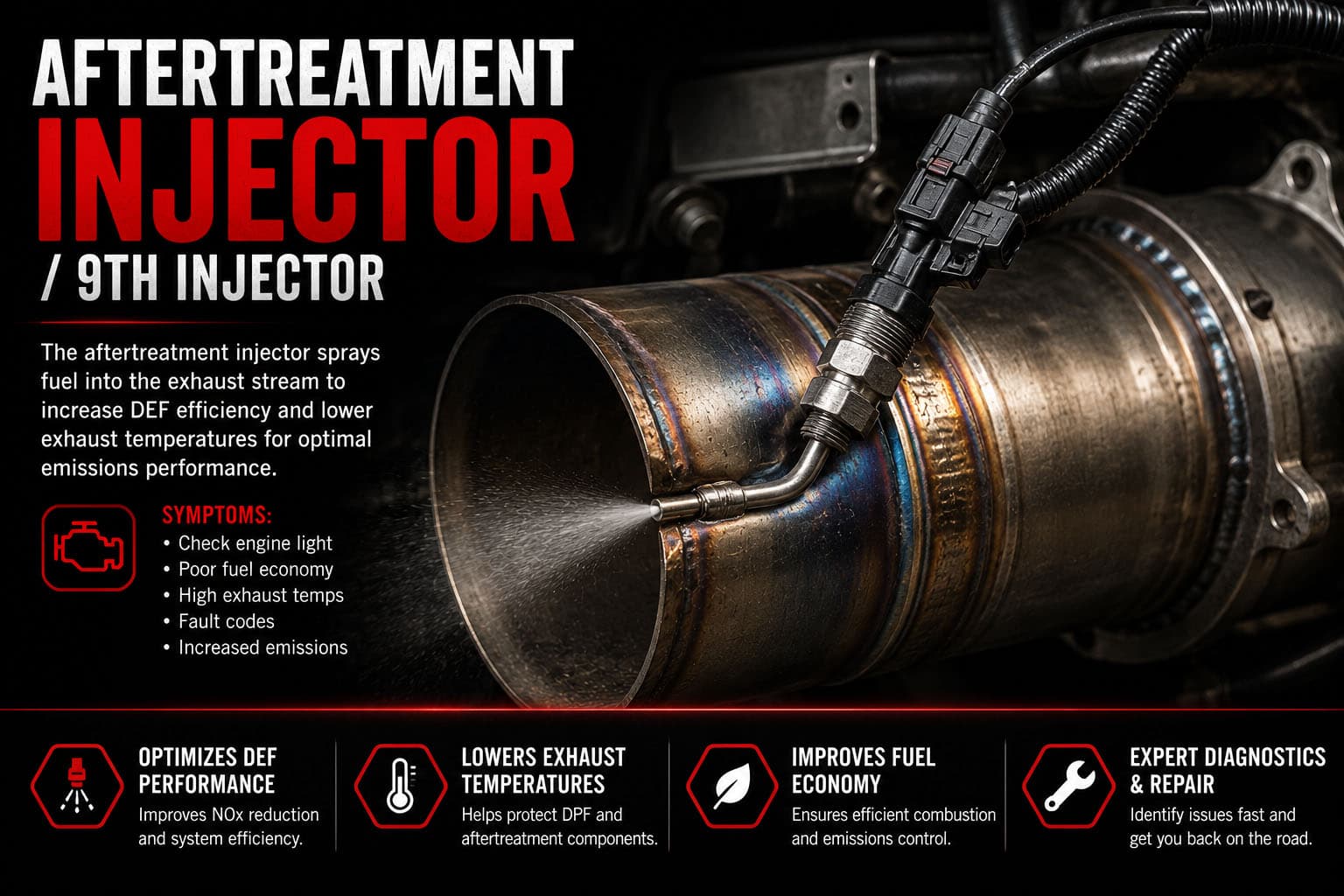
9th Injector
The aftertreatment fuel injector (often called the "9th injector" or HC dosing injector) sprays diesel fuel into the exhaust stream during active regen. When it fails — clogged tip, electrical failure, or carbon buildup — active regen can't complete, DPF accumulation rises, and derate follows.
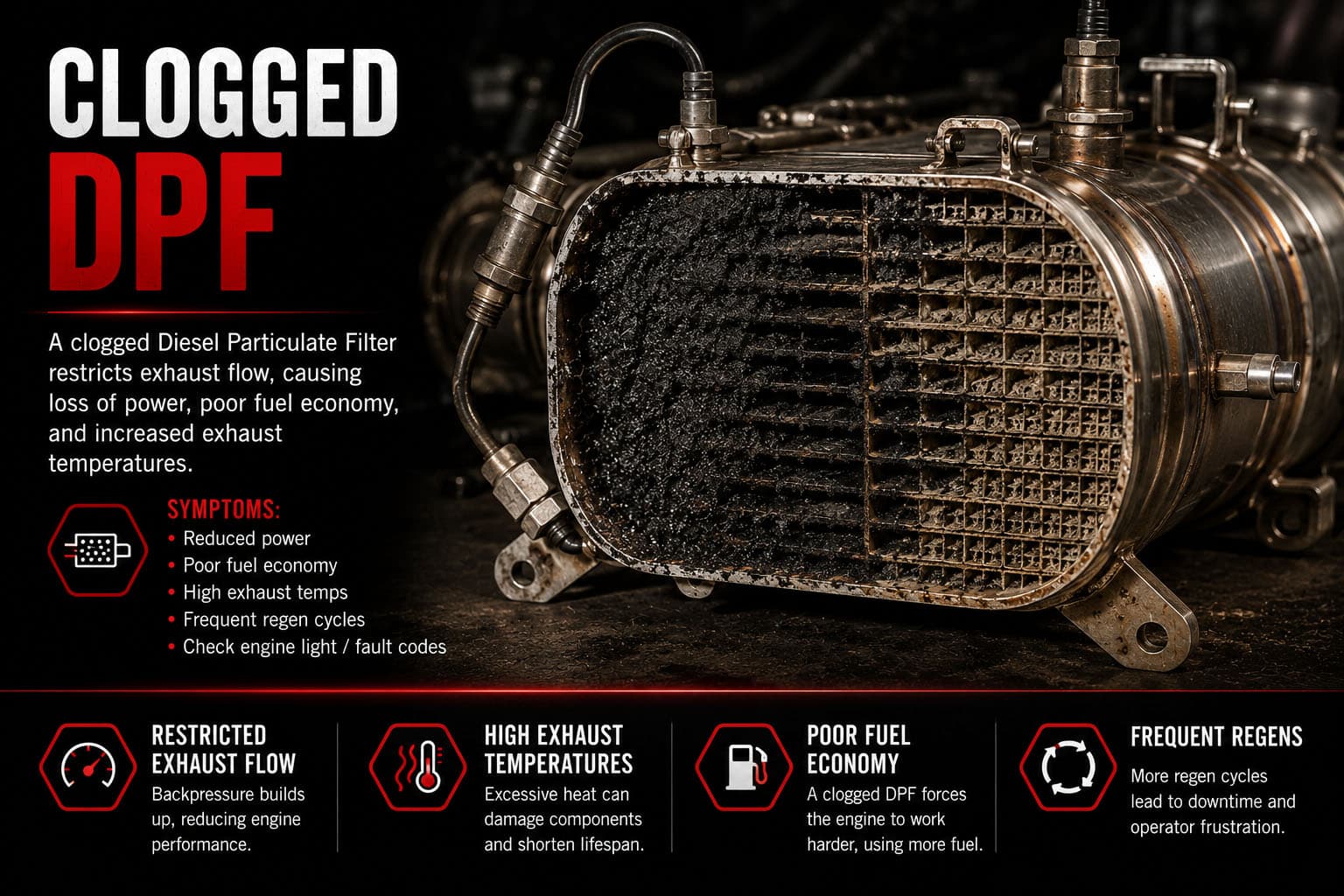
Clogged DPF
Ash accumulation in the DPF substrate has reached or exceeded service limit. The truck increasingly can't regenerate the filter because ash isn't combustible. Service options narrow to DPF cleaning service, DPF replacement, or — for off-road and export trucks — DPF delete.
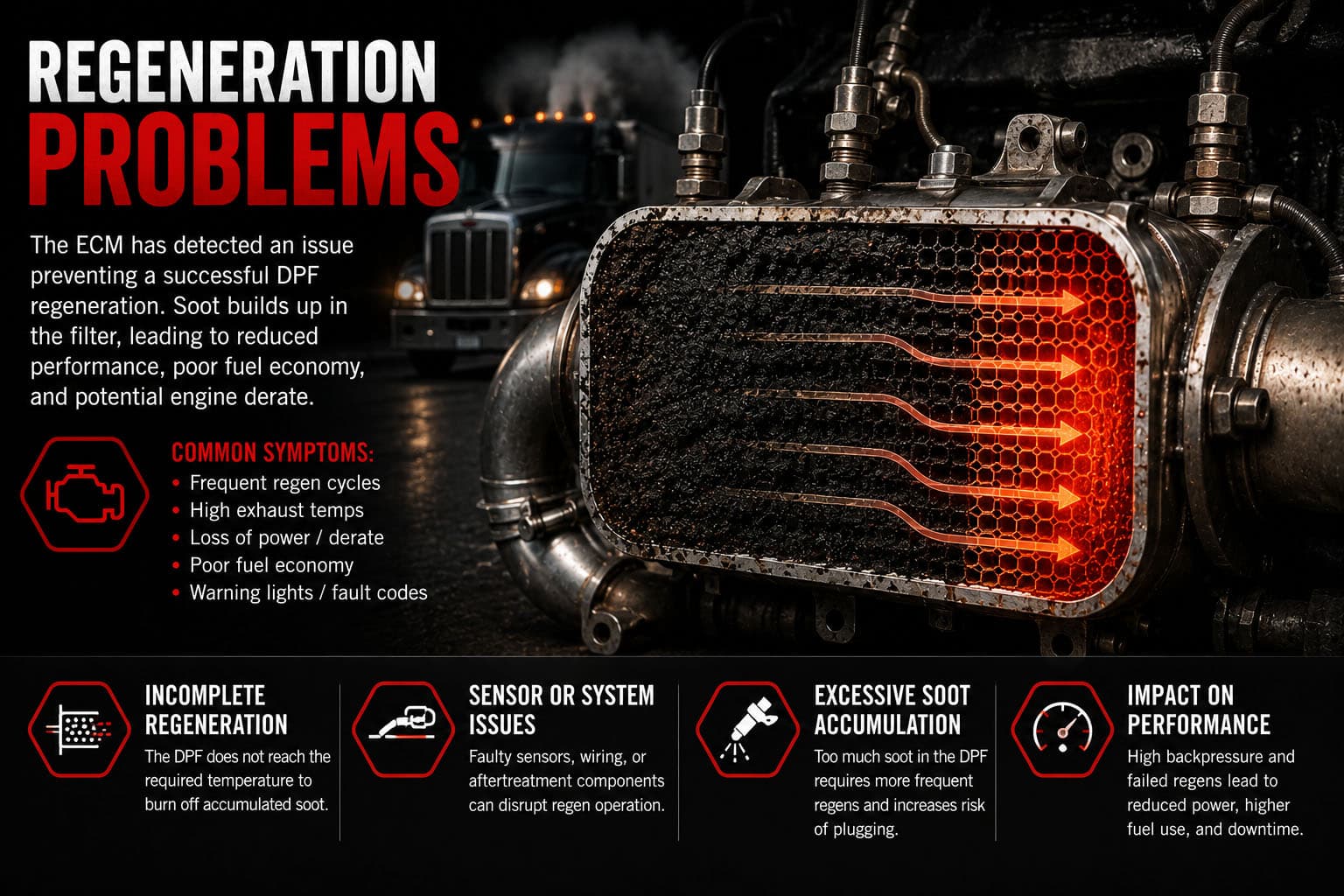
Cold Weather Regen
In sub-zero ambient temperatures, the DPF can't reach light-off temperature, regen never initiates, soot accumulates faster than expected, and the truck enters derate within hours of severe weather operation. Snow plow and northern fleet operators see this pattern routinely each winter.
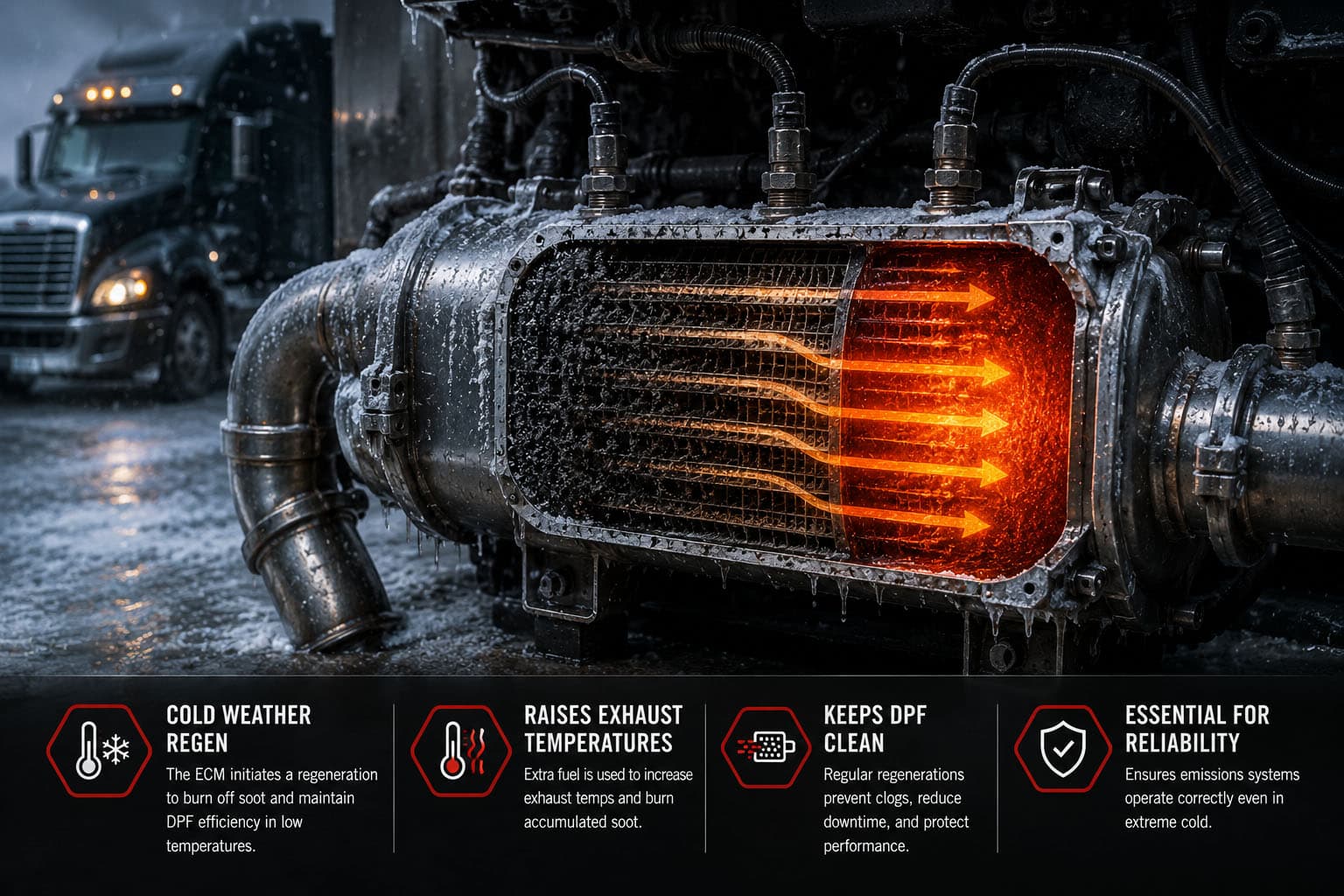
Regen Problems
Active regen cycles trigger but never complete. Engine warning light stays on. Driver sees "Regeneration in progress" or "Stationary regen required" repeatedly. The truck runs but the DPF accumulation problem only gets worse.
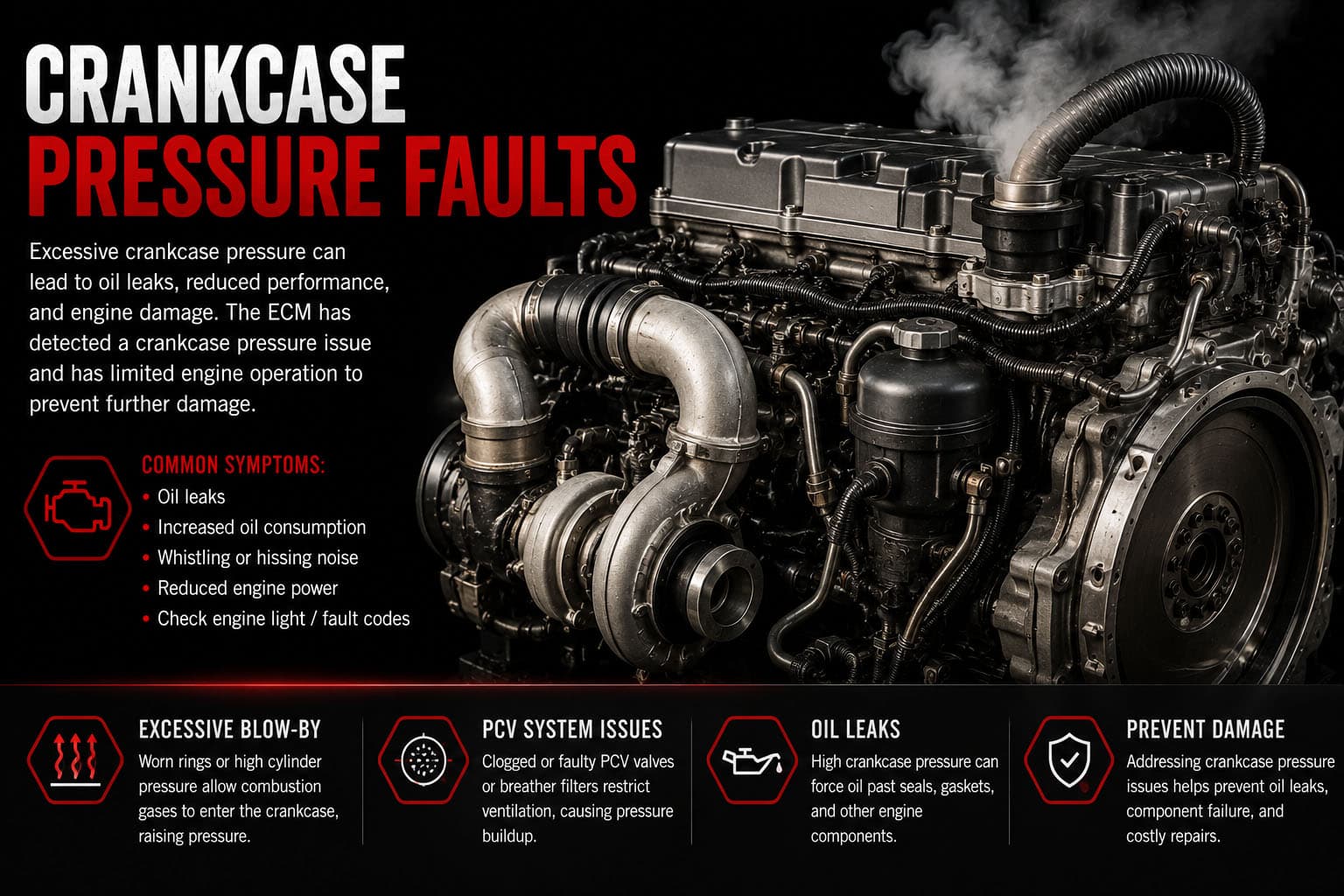
Crankcase Pressure
Crankcase pressure rises above the expected range, triggering fault codes. The pressure increase is often a downstream symptom of DPF backpressure pushing exhaust gas past worn piston rings, but it can also reflect genuine engine wear that demands attention.
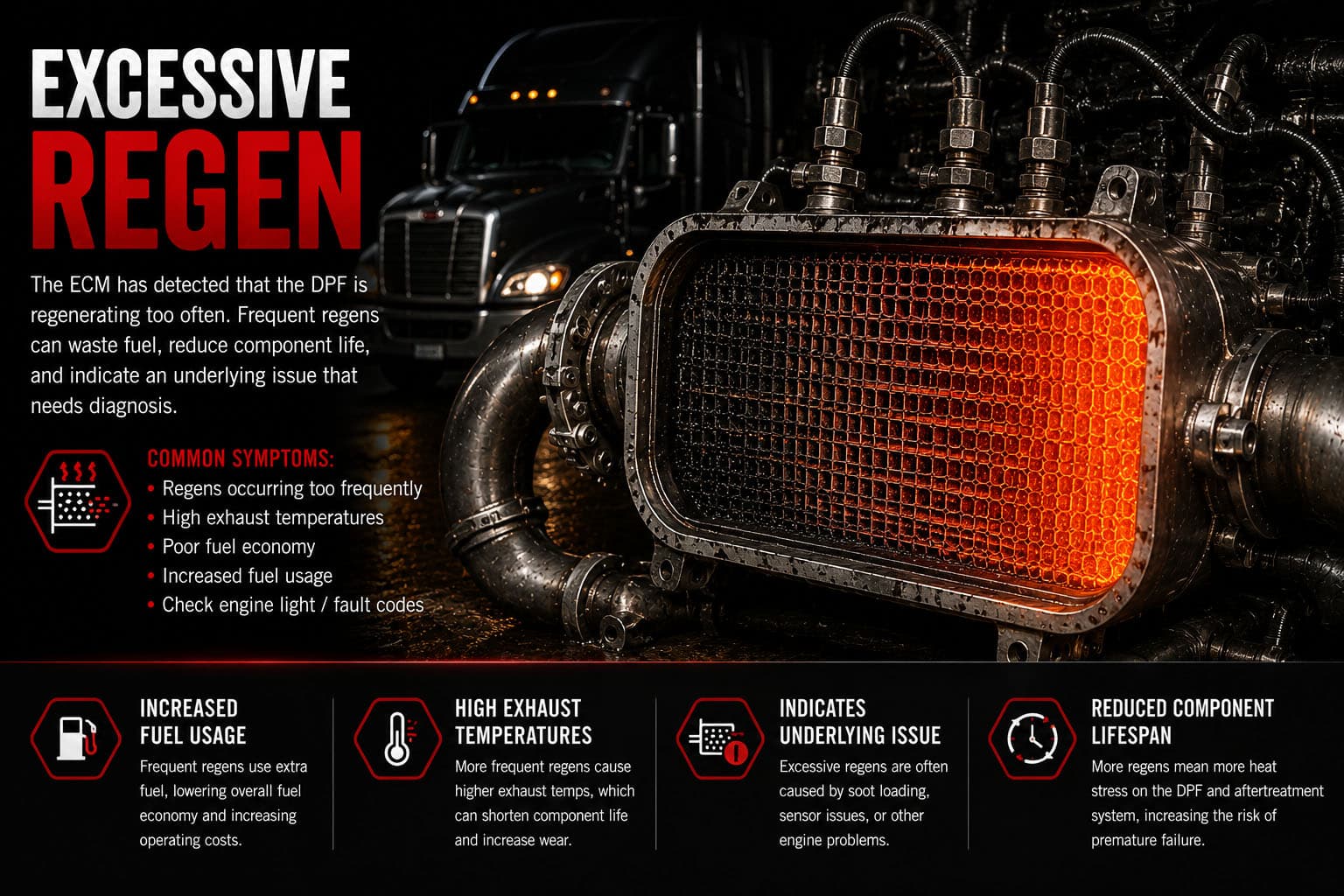
Excessive Regen
The truck regenerates far more often than the calibration target. Operators expect regen events every 200–400 hours; instead they see them every 50–100. Fuel economy drops, DPF substrate ages faster, and the operational economics get worse over time.
Why Symptom-Based Diagnosis Matters
Fault codes tell the ECM's side of the story. Operational symptoms tell the driver's side. Both matter, and the diagnostic value is in understanding where they align and where they diverge.
A truck logging DPF differential pressure fault codes might be experiencing genuine DPF accumulation — or might have a failing sensor reading higher than actual restriction. The fault code itself doesn't distinguish those situations; the operational symptoms do. Trucks experiencing recurring derate without active fault codes might have intermittent issues that clear before diagnostic tools capture them, or might have calibration patterns producing restriction without triggering recorded fault history.
For owner-operators and fleet customers troubleshooting recurring operational issues, working through the symptom pattern often surfaces causes that fault-code-only diagnosis misses. That's why we organize this diagnostic resource around operational patterns rather than only fault codes.
How Symptoms Connect
The symptoms catalogued here aren't isolated — they share root causes and frequently cascade. Understanding the connections helps fleet operators address underlying causes rather than chasing symptoms across the fleet.
Excessive regen cycles accelerate DPF ash accumulation, which leads to clogged DPF substrate. Failed regens leave deposits on the aftertreatment fuel injector, which produces 9th injector issues. Both excessive regen and clogged DPF raise exhaust backpressure, which contributes to crankcase pressure faults. Sustained high exhaust temperatures from frequent regen stress EGR coolers and accelerate their failure. Cold-weather conditions amplify all of these patterns simultaneously.
A truck showing multiple symptoms typically has a single underlying issue producing the cascade. Addressing the underlying cause usually resolves multiple downstream symptoms; treating each symptom individually rarely resolves any of them durably. This is why our diagnostic conversation typically asks about the broader operational history rather than focusing on whichever symptom prompted the call.
When To Reach Out
Reach out when the symptom is recurring rather than one-time, when standard service hasn't resolved the underlying issue, when fleet-wide patterns suggest a common cause, or when you want a second opinion before scoping major service.
Our remote diagnostic service can typically narrow the root cause from fault codes and operational context before any ECM ships to us. For fleet customers managing recurring patterns across multiple trucks, that conversation often identifies fleet-wide calibration or operational issues that wouldn't be visible from any individual truck's diagnostic record. For owner-operators dealing with a specific recurring issue, the conversation typically saves substantial diagnostic time and avoids unnecessary parts replacement.
We've worked with 10,000++ ECMs across 38+ countries. Most diagnostic patterns we encounter are ones we've seen many times before. The diagnostic conversation usually moves quickly because the patterns are familiar — what's new is the specific operational context of your truck or fleet.
Recurring Symptom Across Your Fleet?
Same-day diagnostic conversation. Fleet pattern recognition for recurring issues. Remote diagnostic available worldwide. NDAs available for confidential fleet work.