Soot Vs Ash — Why The Distinction Matters
The DPF filter accumulates two different things during operation, and the distinction is critical to understanding when a DPF is recoverable versus when it needs service.
Soot — carbon particulate from combustion — is combustible and burns off during active regen, converting to CO2 and exiting the exhaust stream. Ash is the non-combustible residue left behind: metallic content from engine oil additives, fuel additives, and trace metals from combustion. Ash accumulates over operational service life and can't be removed by regen no matter how frequent or successful. It can only be removed by physical cleaning service or by replacing the DPF substrate.
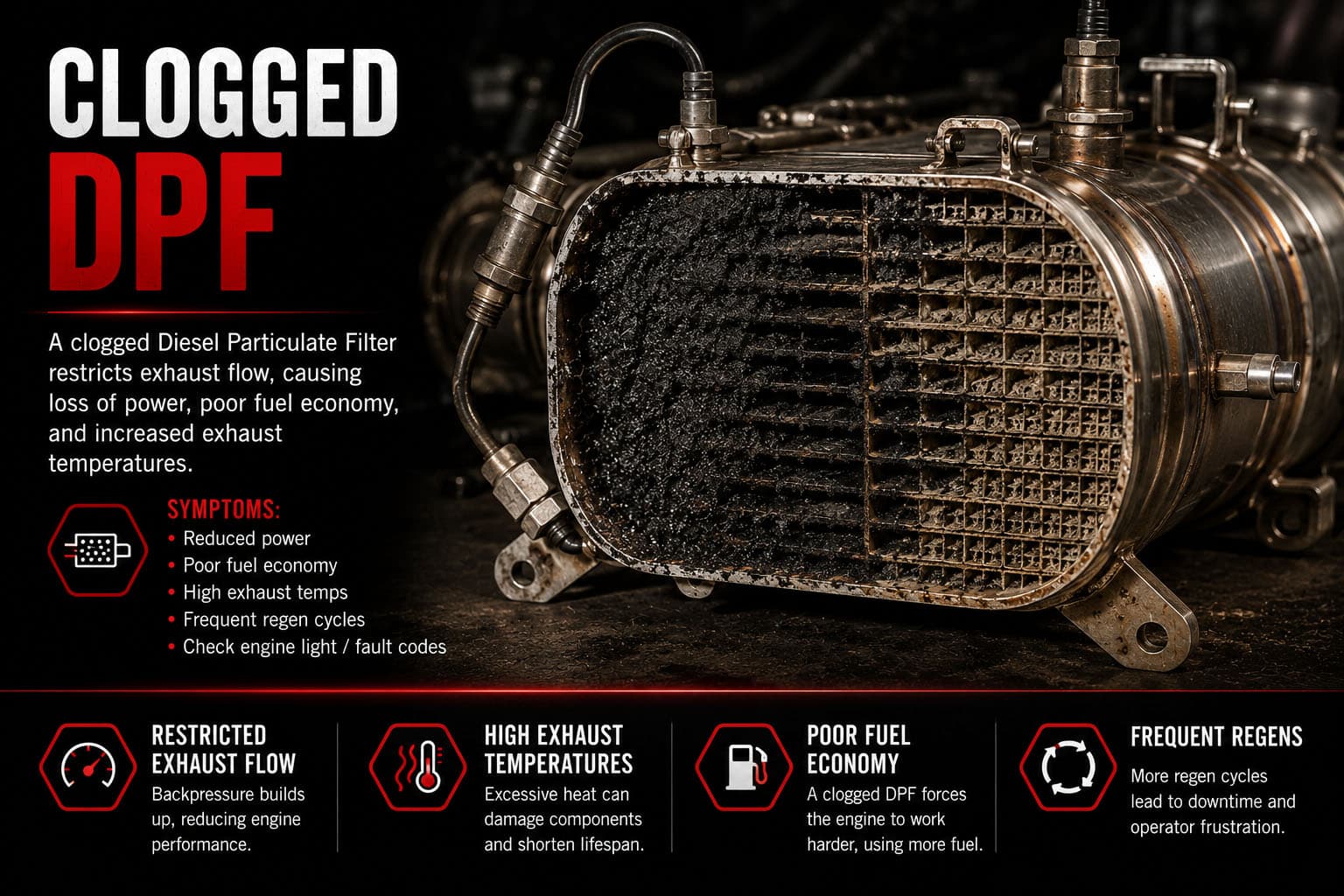
When operators describe a "clogged DPF," they usually mean ash loading approaching or exceeding the substrate's service limit. The DPF can no longer pass exhaust at acceptable backpressure. Regen cycles still trigger but can't bring the substrate back to normal flow restriction because the underlying problem isn't soot anymore — it's permanent ash accumulation. The truck enters derate, the dashboard demands service, and the operator faces a service decision.
How DPFs Get To This State
DPF substrate service limits are typically in the 200,000-400,000 mile range depending on platform, engine oil consumption, fuel quality, and operational duty cycle. Trucks operating in conditions that produce more soot, consume more oil, or use lower-quality fuel reach ash service limit faster.
High-mileage long-haul trucks with good oil control may reach 500,000 miles before ash service is needed. Heavy-vocational trucks with sustained PTO duty may hit ash limit at 200,000. The range across operators and applications is substantial, which is why fleet operators benefit from understanding their specific operational patterns rather than relying on manufacturer averages.
The pattern accelerates when regen cycles fail to complete. Failed regens leave soot in the substrate; over time some of that soot oxidizes incompletely and contributes to ash accumulation faster than nominal patterns predict. Trucks with operational profiles that resist successful regen (stop-and-go, sustained idle, brief duty cycles) typically reach ash service limit substantially earlier than the fleet average. Excessive regen frequency similarly accelerates ash accumulation because more soot oxidation cycles produce more ash residue.
Service Options When You Get There
When the DPF reaches ash service limit, three paths exist. The choice depends on truck regulatory status, operational economics, and the substrate's current physical condition.
DPF cleaning service
Specialty DPF cleaning facilities use thermal, chemical, or ultrasonic cleaning processes to remove ash from the substrate. When successful, the DPF returns to near-new flow restriction and operational service life extends meaningfully. Cleaning service typically costs a fraction of replacement and is the recommended first option for most operators. The cleaning success depends on substrate condition — substrates that have been thermally damaged from sustained high-temperature regen attempts may not respond to cleaning.
DPF replacement
When cleaning isn't possible or doesn't return the substrate to operational service, replacement is the alternative. New OEM DPF substrate is expensive — often in the $4,000-$8,000 range depending on platform — and requires calibration alignment with the new hardware. Aftermarket DPF replacements exist at lower price points but with variable quality and durability outcomes.
DPF delete (off-road / export only)
For off-road and export-bound trucks, removing the DPF entirely and calibrating accordingly eliminates the issue. This isn't a path for on-road compliant trucks, but for trucks in dedicated off-road service or bound for export markets without DPF mandates, delete is the practical permanent solution. The trade-off is regulatory — the path requires the truck operate in roles where DPF compliance isn't required.
Calibration Considerations Around DPF Service
Whichever service path the operator chooses, calibration matters. The new or cleaned DPF substrate needs ECM-side recognition through calibration alignment.
Post-cleaning calibration reset clears accumulated ash count and recalibrates differential pressure sensor baselines. Post-replacement calibration alignment ensures the new substrate's flow characteristics are correctly registered in the ECM. For delete-path trucks, complete calibration restructuring removes the DPF logic from the operational calibration entirely — including removing the differential pressure sensor expectations, the active regen logic, the aftertreatment fuel injector cycling, and the broader DPF-related calibration ecosystem.
Our work in this space ranges from calibration reset after operator-arranged DPF service through complete delete calibration for off-road and export deployments. The right scope depends entirely on what the operator wants out of the work and the regulatory situation the truck is operating under.
Distinguishing Cleaning-Recoverable Vs Replacement-Required
Not every clogged DPF can be returned to service through cleaning. Substrate condition determines whether cleaning will succeed, and operators benefit from understanding what makes the difference before investing in cleaning service that may not restore the substrate.
Substrates that have been thermally damaged from sustained high-temperature regen attempts — often appearing as melted or fractured substrate sections visible on inspection — typically can't be returned to acceptable flow restriction through cleaning. The damage is permanent at the substrate level rather than just accumulated ash that cleaning can remove. Substrates contaminated with engine oil from sustained oil consumption issues similarly resist cleaning recovery.
Substrates with primarily ash accumulation from normal operational service typically respond well to cleaning service and can return to near-new flow restriction. The cleaning service facility should be able to provide condition assessment as part of the service quote rather than committing to cleaning without inspection.
For operators evaluating cleaning versus replacement, the condition assessment matters more than the upfront price comparison. A successful cleaning at a fraction of replacement cost delivers operational value; an unsuccessful cleaning attempt that doesn't return the substrate to acceptable service still costs the cleaning service price without delivering the operational outcome.