What Counts As Excessive
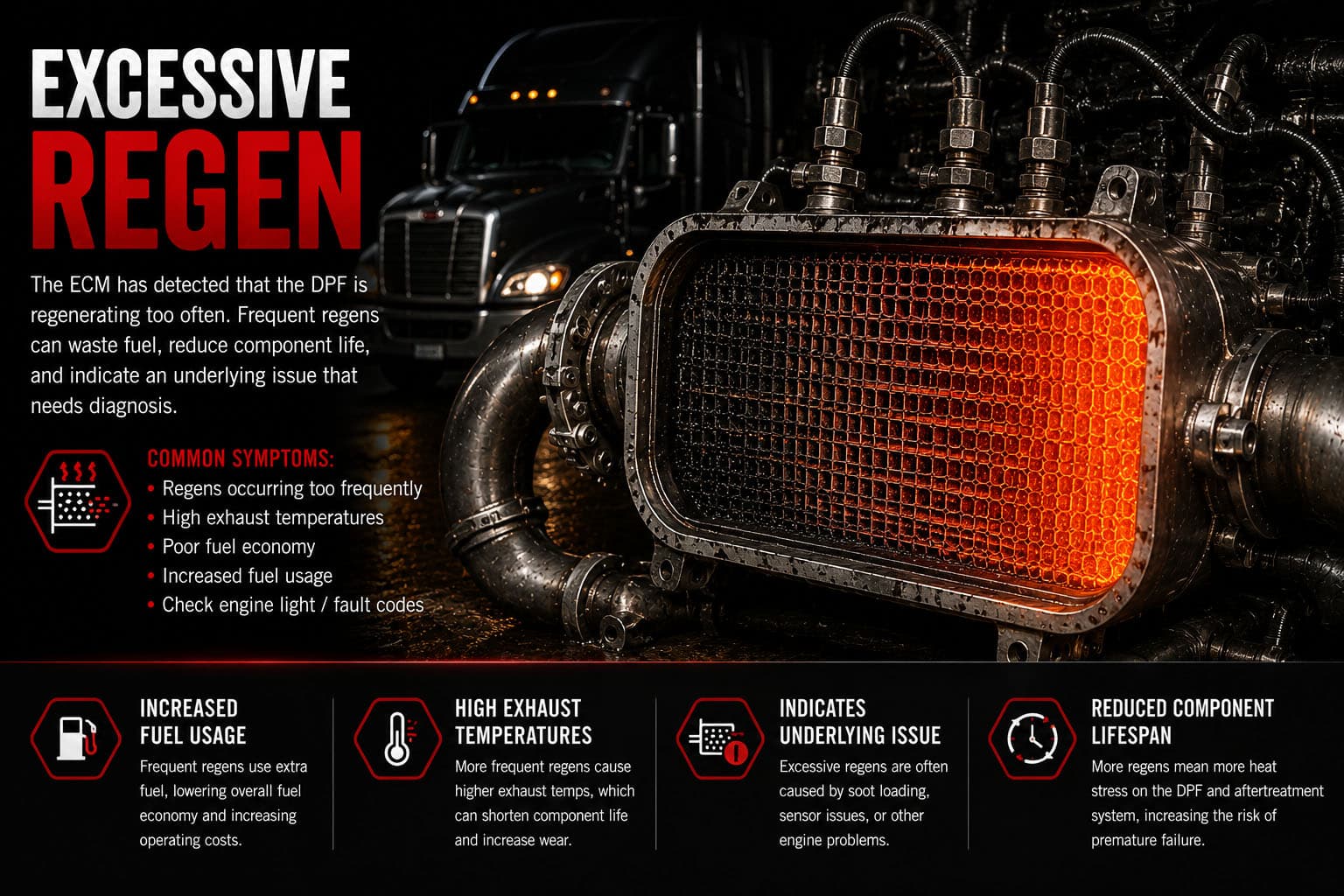
Modern diesel calibration targets active regen frequency in the 200-400 hour or 8,000-15,000 mile range depending on platform, application, and fuel quality. When trucks regenerate substantially more often than the target — every 50-100 hours, every 3,000-5,000 miles — operational economics deteriorate and DPF substrate ages faster than expected.
The truck still runs, fault codes may not even trigger, but the fleet operator notices fuel economy dropping and DPF service intervals shortening across the fleet. The symptom isn't dramatic the way derate is — it's a gradual operational degradation that fleet managers eventually identify through metrics analysis.
For fleet operators tracking operational metrics, excessive regen shows up first as fuel economy drift — typically 5-15% degradation depending on regen frequency increase. Each active regen burns fuel that doesn't translate to operational miles. A truck that regenerates twice as often as expected loses meaningful annual fuel cost to the additional regen cycles, and DPF service intervals shorten accordingly.
Why It Happens
Excessive regen reflects soot loading rising faster than the calibration target assumed. Several patterns drive this, and they often combine rather than appearing in isolation.
Operational duty cycle producing more soot than expected
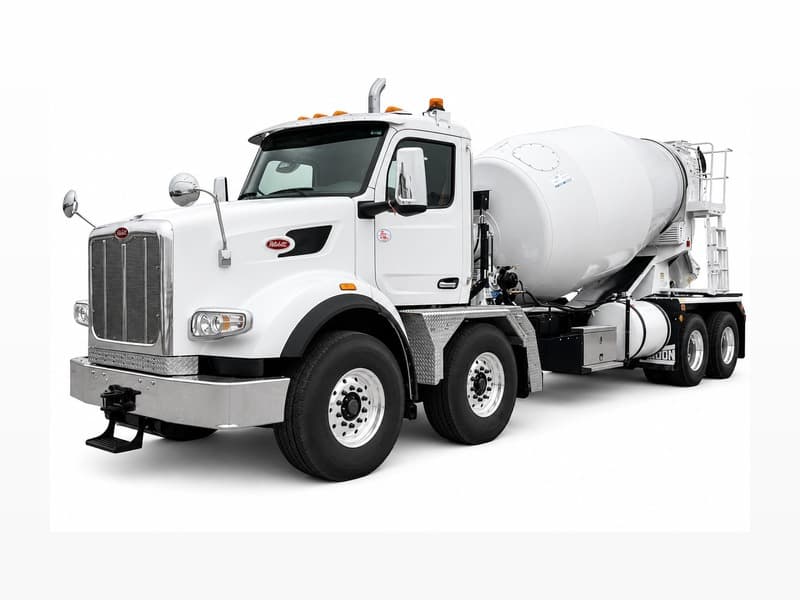
Low-RPM heavy-load operation common in concrete mixers, refuse trucks, construction haul on grade, and similar vocational applications produces substantially more soot per operational hour than highway-cycle operation. Fleet calibration assumes highway-cycle averages; the actual operational soot generation can be 2-3x higher in heavy vocational service.
Hardware degradation increasing soot output
Failing turbochargers (VGT actuator issues, bearing wear, vane sticking) produce excess soot. Failing injectors with poor spray pattern produce more soot. EGR system issues that don't yet trigger fault codes can shift soot output upward. Air filter restriction, charge air cooler issues, and intake leaks all contribute. Often the hardware degradation isn't severe enough to trigger primary fault codes but is severe enough to shift the operational soot output meaningfully.
Calibration drift or hardware-calibration mismatch
Sensors drift over operational service life. Aging differential pressure sensors may read higher than actual restriction, triggering regen earlier. Carbon buildup affects sensor behavior. Calibration that worked at delivery may not match the truck's current hardware state. The mismatch between calibration assumptions and actual hardware behavior can drive substantial regen frequency increases without any single hardware failure being severe enough to identify on its own.
Connection To Other Symptoms
Excessive regen is rarely an isolated issue. It typically appears alongside or leads into other diagnostic patterns, and addressing it often resolves multiple downstream issues simultaneously.
Trucks regenerating excessively are accumulating ash faster, which means clogged DPF arrives sooner. The aftertreatment fuel injector cycles more often, accelerating its degradation toward 9th injector failure. Higher DPF backpressure can drive up crankcase pressure. Sustained high exhaust temperatures from frequent regen stress EGR coolers and accelerate their failure. The pattern compounds across the broader aftertreatment service ecosystem.
For fleet operators dealing with excessive regen across multiple trucks, addressing the underlying cause delivers operational improvements that affect the broader aftertreatment service ecosystem. Calibration work that reduces regen frequency from every 80 hours to every 250 hours doesn't just save fuel — it extends DPF service interval, reduces 9th injector replacement frequency, lowers EGR cooler failure rate, and improves the broader operational economics of the affected trucks. The compounding savings across multiple service categories often substantially exceeds the direct fuel economy improvement.
Resolution Approaches
Effective resolution depends on identifying which root cause cluster is driving the issue. The diagnostic question is which combination of operational, hardware, and calibration factors is producing the elevated regen frequency.
Operational-duty-cycle-driven excessive regen responds best to calibration work that matches the truck's actual application reality rather than the fleet calibration's average-case assumptions. Hardware-degradation-driven excessive regen needs hardware service (turbo, injectors, EGR) before calibration work can hold — calibration adjustments alone can't compensate for a failing turbo. Calibration-drift or sensor-related issues need sensor service alongside calibration recovery.
Our diagnostic conversation walks through the specific operational pattern, recent service history, fault code history even if no codes are currently active, and the broader fleet pattern if multiple trucks show similar issues. The result is calibration scope matched to actual root cause rather than generic excessive-regen treatment.
Operational Economics Of Excessive Regen
The operational cost of excessive regen extends well beyond the direct fuel cost of additional regen cycles. Each active regen subjects the entire aftertreatment system to thermal stress that accelerates wear on the DOC catalyst, the DPF substrate, the aftertreatment fuel injector, and surrounding hardware. Trucks regenerating twice as often as nominal will see aftertreatment service intervals shorten across the board.
For a fleet averaging 100,000 miles per truck per year, shifting from a 12,000-mile regen interval to a 5,000-mile regen interval more than doubles the annual regen count and meaningfully accelerates the truck's progression toward DPF ash service limit. The compounding effect across multiple service categories often substantially exceeds the direct fuel cost difference, particularly across multi-year fleet operational planning windows.
Fleet operators who track operational metrics carefully often identify excessive regen first through fuel economy drift and DPF service interval shortening rather than through fault codes — the symptom appears as gradual operational degradation rather than dramatic failure. Recognizing the pattern early and addressing the underlying cause delivers compounding operational improvements that affect multiple downstream service categories.