What Crankcase Pressure Is Measuring
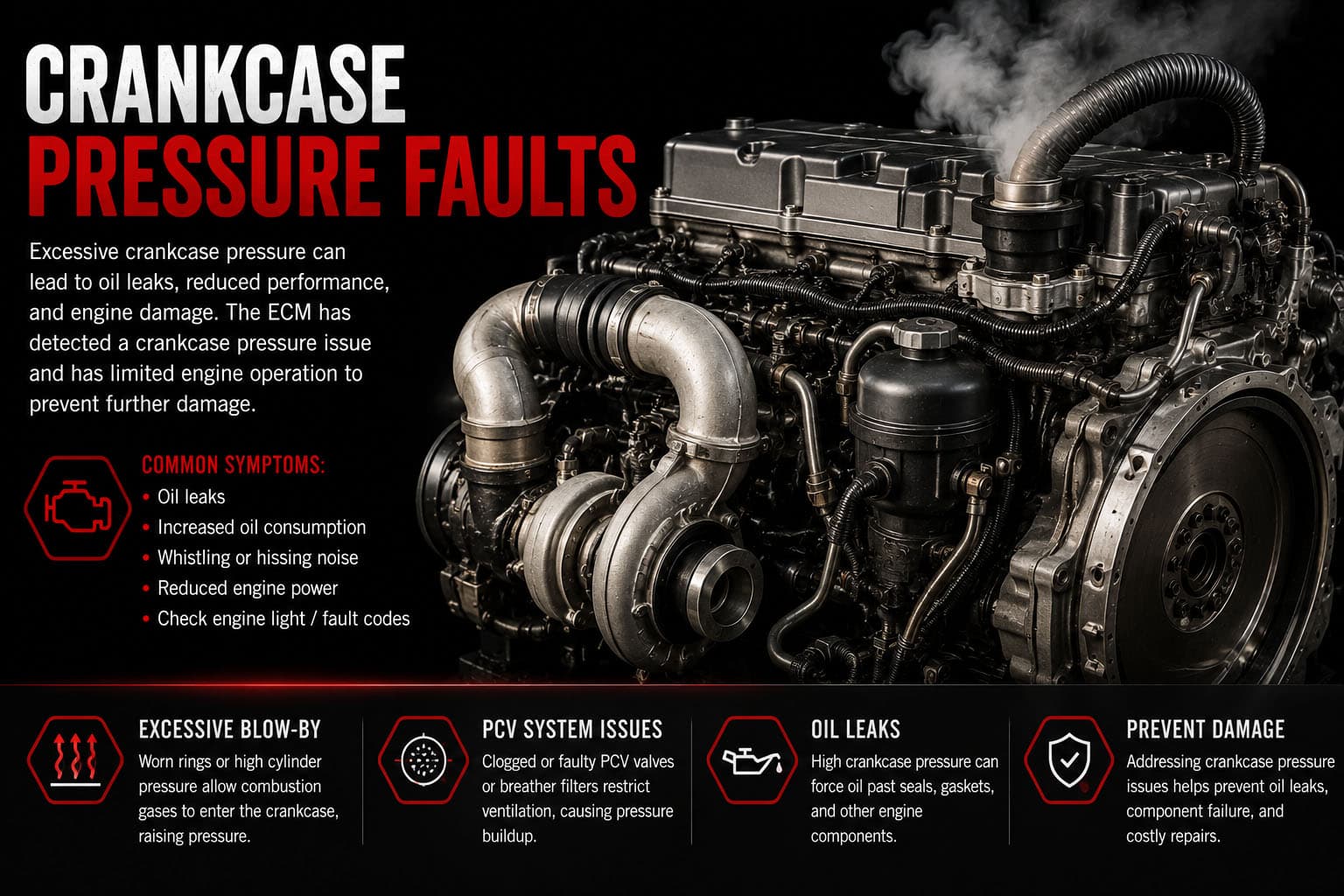
Diesel engines vent crankcase gases through a crankcase ventilation (CCV) system — closed CCV designs route those gases back through the intake for combustion, open CCV designs route them through a separator and out a vent.
The crankcase pressure sensor monitors the pressure inside the crankcase relative to atmospheric. Normal pressure is slightly positive — typically a few inches of water column — reflecting normal blow-by past the piston rings combined with the CCV system's flow characteristics.
When crankcase pressure rises beyond expected range, fault codes trigger. The cause matters because crankcase pressure faults can reflect anything from a benign CCV system issue through serious engine wear that demands immediate attention. Misdiagnosing the root cause leads operators down expensive paths that don't solve the actual problem.
The DPF Backpressure Connection
One of the most common — and least obvious — causes of elevated crankcase pressure on modern post-2007 trucks is DPF backpressure. As DPF restriction rises (soot accumulation, ash accumulation, substrate damage), exhaust backpressure rises proportionally.
That backpressure pushes combustion gases past piston rings into the crankcase at higher volume than the CCV system was designed to handle. Crankcase pressure rises, fault codes trigger, and the operator sees a "crankcase pressure" diagnostic that's actually pointing at a DPF problem.
This connection matters because operators sometimes interpret crankcase pressure faults as indicating major engine wear when the underlying cause is actually elsewhere. Addressing DPF accumulation can resolve crankcase pressure faults that initially looked like engine wear issues. A truck that appears to need engine rebuild may actually just need DPF service plus calibration work.
Other Root Causes
Piston ring wear allowing increased blow-by
Genuine engine wear at high mileage — typically 500,000+ miles depending on platform and operational profile — produces increased blow-by past the piston rings. The crankcase pressure rises because the CCV system can't keep up with the increased gas volume. This is the failure mode operators worry about because it points at major engine work.
CCV system clogged or failed
The crankcase ventilation system itself — separator, vent lines, return passages — can clog with oil and combustion residue. When the CCV system can't flow gases out at the rate they're being produced, crankcase pressure rises even with normal blow-by. CCV system service is generally inexpensive and often resolves the issue when the underlying problem is the ventilation system rather than blow-by volume.
Turbocharger seal failure
The turbo's compressor-side oil seal failures allow turbo boost pressure to pressurize the crankcase through the oil drain return. This is more dramatic than other causes and typically appears alongside oil consumption and turbo performance issues.
Diagnostic Approach And Calibration
Effective diagnosis requires distinguishing between these root causes. Operational history matters — fault code timing relative to DPF service intervals, mileage at first occurrence, presence or absence of other diagnostic patterns. Fault code analysis matters — codes appearing alongside DPF restriction codes point one direction, codes appearing alongside oil consumption issues point another.
For trucks where crankcase pressure faults appear alongside DPF accumulation issues, addressing the DPF often resolves the crankcase pressure issue without needing engine work. For trucks where crankcase pressure faults appear in isolation at high mileage with oil consumption and other engine-wear indicators, the diagnosis points at engine work.
Calibration work alone doesn't resolve actual mechanical issues, but calibration can affect the operational stress patterns that contribute to crankcase pressure faults. Our work in this space focuses on the calibration side and works with operators on understanding the diagnostic picture before scoping the appropriate calibration response.
Distinguishing DPF-Driven From Engine-Wear-Driven
The single most important diagnostic question with crankcase pressure faults is whether the elevated pressure reflects engine wear (blow-by from worn rings) or downstream aftertreatment restriction (DPF backpressure pushing combustion gases past rings into the crankcase). The two causes look identical at the sensor reading but require completely different service approaches.
Mileage matters but isn't conclusive. Trucks past 500,000 miles can develop genuine ring wear that produces blow-by sufficient to elevate crankcase pressure. Trucks at 250,000 miles with severe DPF accumulation can produce equivalent crankcase pressure readings without any actual engine wear. Operational history matters more than mileage alone.
Diagnostic clues that point toward DPF-driven crankcase pressure include: simultaneous DPF restriction codes, recent history of failed regens or derate events, elevated exhaust backpressure readings, crankcase pressure that improves substantially after DPF service. Diagnostic clues that point toward engine wear include: oil consumption that has been gradually increasing over months or years, oil contamination patterns consistent with combustion blow-by, crankcase pressure that doesn't improve with DPF service, blue exhaust under load.
Effective resolution requires distinguishing between these patterns before scoping service. Trucks where the crankcase pressure issue is DPF-driven can be returned to operational service through DPF service plus calibration work — typically for a fraction of engine rebuild cost. Trucks where the crankcase pressure issue reflects genuine engine wear need engine work to actually resolve the underlying problem.
Our diagnostic conversation walks through the operational and fault code history before recommending an approach. Misdiagnosing engine wear when the underlying cause is DPF accumulation leads to expensive engine work that doesn't solve the actual problem; misdiagnosing DPF accumulation when the underlying cause is engine wear leads to DPF service that produces only temporary improvement before the underlying wear pattern resurfaces.