Kenworth's Class 7 Medium-Duty Workhorse
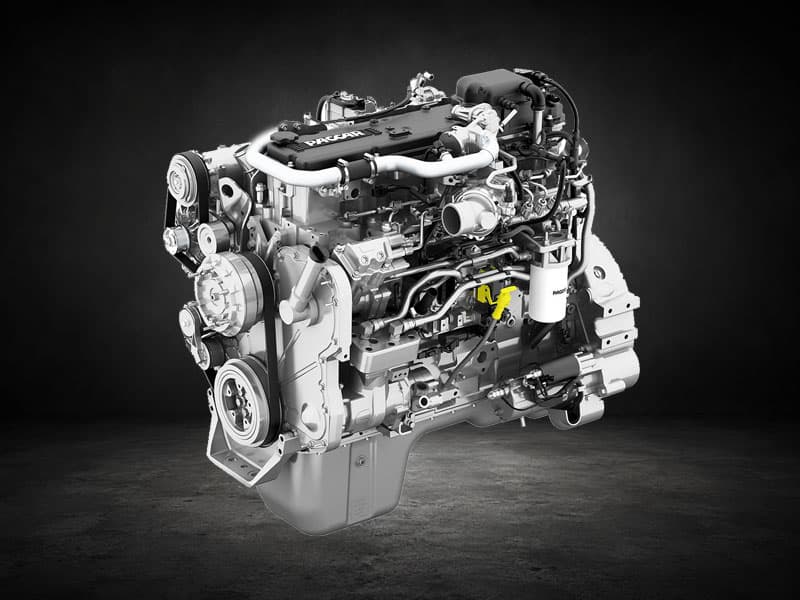
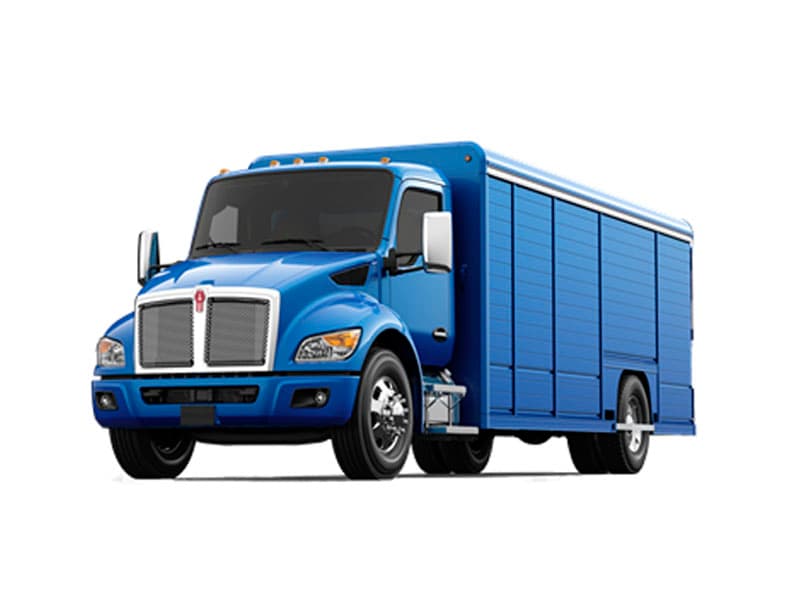
The Kenworth T380 is the Class 7 conventional medium-duty truck in Kenworth's new-generation lineup — the direct replacement for the prior T370 platform, with Paccar PX-9 power, conventional cab architecture, and chassis specifications designed for Class 7 vocational and fleet applications across a broad operational range. GVWR configurations span from approximately 26,000 to 33,000+ pounds depending on application configuration, placing the T380 firmly in Class 7 territory where Paccar PX-9 8.9-liter power becomes the natural fit for the chassis spec.
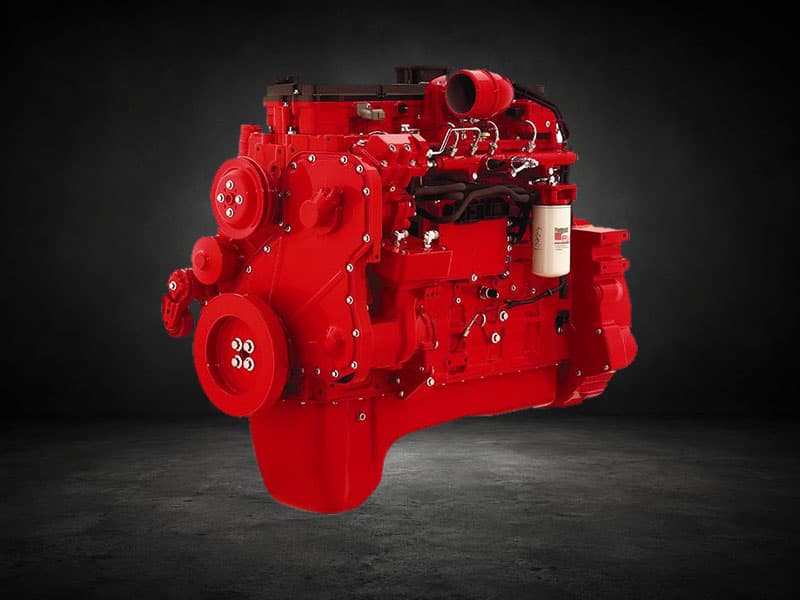
The platform appears across utility service applications, fire and EMS apparatus on Class 7 medium-duty chassis, waste sanitation operations including vacuum trucks and sewer service vehicles, smaller refuse collection applications, ready-mix concrete delivery configurations on the lighter end of the concrete fleet population, and the broader range of Class 7 vocational fleet operations. Paccar PX-9 is the dominant power option; Cummins ISL 9 is available on some fleet configurations.
Why T380 Trucks Come To Our Bench
T380 calibration work tracks Paccar PX-9 platform behavior across the diverse Class 7 vocational application space:
Paccar PX-9 DPF derate on vocational duty. Standard PX-9 pattern, expressed through the specific operational stress profiles of Class 7 vocational applications. Utility service work with sustained PTO duty, fire apparatus with pump operations, waste sanitation with vacuum PTO duty, concrete delivery with drum-rotation PTO duty — each application produces its own variation on the standard PX-9 DPF accumulation pattern, with derate clustering at predictable mileage thresholds.
DEF dosing failures on Paccar PX-9 EPA 2010 builds. Standard post-2010 pattern. T380 trucks with PX-9 power show DEF dosing failures clustering past 250,000-400,000 miles in vocational fleet service, with timing varying by application severity.
EGR cooler degradation on Class 7 vocational service. Standard Paccar PX-9 platform pattern, expressed through the operational stress of Class 7 vocational duty cycles. Coolant intrusion into intake, intermittent fault codes, eventual catastrophic failure if untreated. Predictable failure patterns clustering by 300,000-450,000 miles in Class 7 vocational fleet service.
Fire apparatus pump-derate operational issues. T380 chassis configured as fire apparatus face the standard fire-and-EMS aftertreatment challenges. Engine derate during pump operations is operationally critical, and calibration work that adjusts derate logic and DPF pressure thresholds addresses this directly. For fire department customers, this is typically the primary calibration conversation.
Waste sanitation vacuum-PTO calibration adjustments. T380 trucks in vacuum truck and sewer service applications face the standard waste sanitation aftertreatment challenges. Calibration work that accounts for extended vacuum-pump PTO duty delivers operational improvements for this application segment.
Calibration recovery on PX-9 ECMs. PX-9 modules occasionally end up corrupted after failed Paccar dealer flashes or partial calibration loads. We recover most modules without replacement.
Paccar PX-9 Calibration Approach On The T380
T380 calibration work uses Paccar Davie diagnostic software with PX-9 specific calibration libraries. The libraries account for Class 7 vocational application diversity — fire apparatus, waste sanitation, utility service, concrete delivery, and similar applications each represent specific calibration approaches within the broader PX-9 platform.
For each T380 customer, intake conversation centers on identifying specific application — fire apparatus, waste sanitation vacuum truck, utility service, concrete delivery, generic vocational — because the calibration approach depends meaningfully on actual duty cycle and operational priorities.
Service Paths For T380 Programming
Ship-in is the most common path. Pull the PX-9 ECM, ship to Fort Lauderdale, 2-3 day programming turnaround. Remote programming works for shops with Paccar Davie diagnostic access. On-site service is available for South Florida fleet customers running T380 inventory.
Quotes return same business day. Tell us the year, the engine (Paccar PX-9 or Cummins ISL), the application, fleet size, and current operational situation. For fire department, municipal, and vocational fleet customers, multi-truck programming pricing applies and scheduling coordinates around operational priorities. For fire departments specifically, rapid turnaround for apparatus needing to return to service is standard practice.
The T380 Across Class 7 Vocational Applications
The T380 represents Kenworth's flagship Class 7 conventional medium-duty offering — successor to the T370 platform that dominated Class 7 vocational work for over a decade. For fleet customers with mixed T370 and T380 inventory, our calibration work covers both platform generations consistently, drawing on the same Paccar PX-9 platform expertise we maintain across the broader Kenworth medium-duty range and the broader Paccar truck family including K370, T480, and similar PX-9 applications.
For Class 7 vocational fleet customers running diverse application inventory across the T380 platform, calibration approaches benefit from our application-specific expertise — fire apparatus calibration draws on broader fire-and-EMS work, waste sanitation calibration draws on the broader waste sanitation expertise we maintain, and so on across the application range.
T370 To T380 Generation Transition
For fleet operators transitioning between the prior T370 generation and the current T380 generation, the Paccar PX-9 engine platform remains consistent across both generations, but chassis architecture, electronic systems integration, and emissions calibration evolved with the platform refresh. For fleets running both generations in active service, calibration approaches that account for the differences let the operator standardize operational reliability across the mixed-generation fleet population. Our calibration libraries cover the PX-9 platform across the full operational deployment range, which makes mixed-generation fleet work straightforward.