Mobile Medical Operational Reality
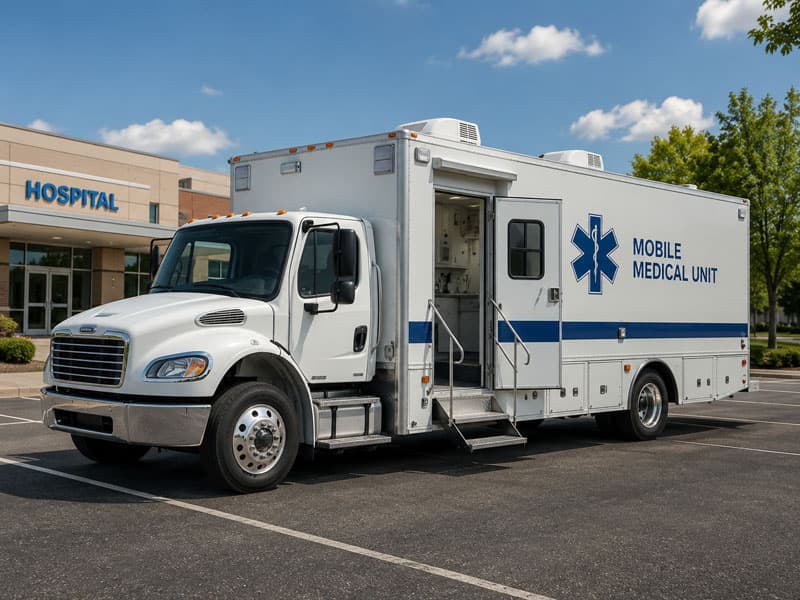
Mobile medical units — mammography trucks, MRI units, CT scan trailers, mobile dental clinics, mobile blood collection units, mobile imaging suites, and specialized medical service vehicles — operate under a duty cycle that combines elements of road service with specialized equipment-powering requirements. The trucks travel to service locations (community health events, rural hospitals, corporate wellness programs, school health screenings) and then operate as stationary medical service facilities for hours or days at a time. The medical equipment requires substantial electrical power, typically supplied through the truck's PTO-driven generator system or through dedicated genset hardware.
The fleet population is specialized but spans recognizable commercial chassis platforms. Class 8 highway tractors (Freightliner Cascadia, Kenworth T680) configured to tow specialized medical trailers — MRI units, CT scanners. Class 6-7 medium-duty chassis (Freightliner M2 106, M2 112) configured as integrated mobile medical clinics. Smaller specialized vehicles on Ford F-650 or Sprinter chassis for mobile mammography, blood collection, or dental service. The chassis configurations are typical commercial vehicle platforms. The operational pattern is specialized to medical service requirements.
What's Actually Affecting These Vehicles
Extended PTO duty for equipment power. Mobile medical units run sustained PTO duty during service operations — typically 4-8 hours per service day at each location, supplying power to medical imaging equipment, climate control for patient comfort, and the broader electrical loads that mobile medical service requires. The thermal pattern produced by sustained PTO operation differs from highway-cycle operation, and aftertreatment systems don't respond gracefully to the duty cycle.
DPF derate during service operations. Engine derate triggered by DPF pressure during medical service operation is operationally critical. The medical equipment can't operate at reduced power — imaging quality depends on stable electrical supply, climate control affects both patient comfort and equipment performance, and service quality depends on the truck delivering its rated PTO capability for the full service day.
Travel-day vs service-day duty cycle differences. Mobile medical units alternate between highway travel days (moving the unit between service locations) and service days (sustained stationary PTO operation). The aftertreatment system sees radically different conditions on these two types of operational days, and fleet calibration doesn't handle the alternation gracefully.
Long service intervals between operational windows. Some mobile medical units operate on intermittent schedules with extended gaps between service days. The pattern stresses DEF systems and produces calibration-side issues that appear when service resumes after extended downtime.
What Calibration Work Can Do
For mobile medical units staying compliant with emissions requirements, recalibration work targets the specific service-day operational reality. Modified regen logic that accounts for extended PTO duty patterns. Adjusted DPF pressure thresholds that don't trigger derate during sustained service operation. Recalibrated DEF dosing strategies for the alternating travel/service operational pattern. Inducement countdown clearing after aftertreatment hardware service.
For mobile medical units in operations where service interruption directly affects patient care — particularly the medical specialty units operating in underserved areas — calibration work that addresses recurring aftertreatment issues directly improves service reliability and the operational mission of the unit.
Calibration recovery on bricked ECMs is also routine mobile medical fleet work, particularly for older specialized units facing thinning dealer support.
Mobile Medical Operational Reality
Mobile medical operations directly serve patient populations — community health screening events, rural hospital outreach programs, corporate wellness programs that bring medical service to employees, school district health screening programs. Service interruption affects patients who may not have ready alternatives. Recurring aftertreatment issues affect the operational mission of the unit beyond just the fleet operational economics.
We work with mobile medical operators ranging from single-unit specialty providers through large mobile medical service operations with substantial unit inventory. Pricing structures accommodate both single-unit calibration work and fleet-volume programming. NDAs are routine, and scheduling typically coordinates with the unit's service calendar.
Service Paths For Mobile Medical Programming
Ship-in is the most common path. Pull the ECM, ship to Fort Lauderdale, 2-3 day programming turnaround. Remote programming works for operators with shop access to appropriate diagnostic software. On-site service is available for South Florida operators.
Quotes return same business day. Tell us the unit configuration (integrated chassis or tractor-trailer), the engine, the year, the medical service type, and current operational situation. For mobile medical operators with regional or multi-unit operations, fleet-volume pricing applies and scheduling coordinates around the service calendar.
PTO Power Quality And Medical Equipment
One operational dimension specific to mobile medical units is the relationship between engine PTO power quality and medical equipment performance. Imaging equipment in particular requires stable electrical supply — voltage variations and frequency fluctuations affect imaging quality. Calibration work that produces consistent PTO performance under varying load conditions directly affects the medical service quality the unit can deliver. This is particularly relevant for MRI and CT units, where image quality requirements are stringent and any electrical supply variation translates to operational service issues.
For mobile medical operators where the calibration question intersects with medical equipment performance, the conversation centers on operational priorities specific to medical service delivery rather than just generic fleet calibration outcomes.