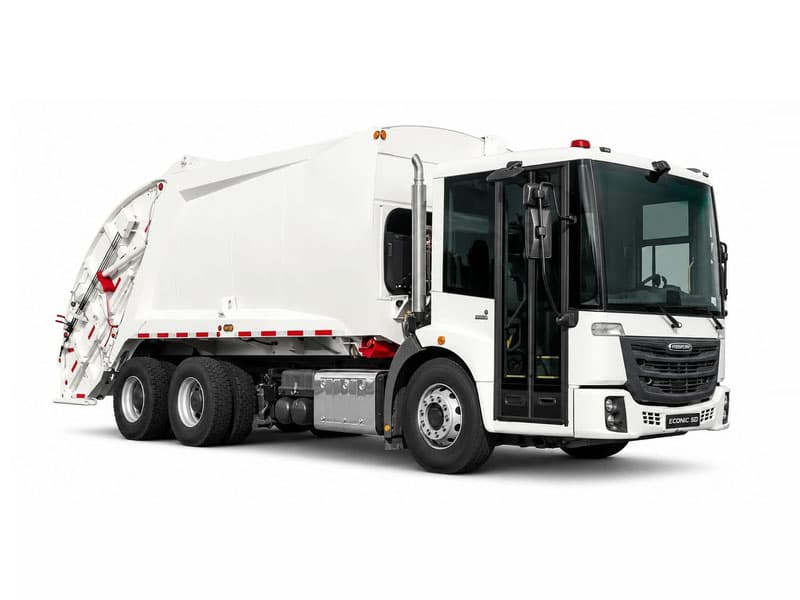
Freightliner EconicSD — Freightliner's purpose-built refuse low-entry cab
The Freightliner EconicSD is Freightliner's purpose-built low-entry cab refuse and waste sanitation specialty truck — adapted from the European Mercedes-Benz Econic platform for North American market deployment in 2020. The low-entry cab architecture positions the driver's seating extremely close to the ground, providing rapid step-in and step-out access optimized for side-loader refuse operations where the driver dismounts at every collection point. Forward visibility is exceptional, the cab is engineered for rapid entry/exit, and the platform's overall design targets refuse-specific operational reality more than general vocational work.
The platform serves side-loader refuse collection, recycling collection where side-loader architecture matches operational requirements, and broader purpose-built refuse-specific applications. The EconicSD competes in the niche low-entry refuse cabover segment where the operational priorities differ from broader LCF refuse cabover platforms like the Kenworth L770, Peterbilt 520, or Mack LR. The EconicSD's specialty low-entry architecture targets side-loader refuse operations specifically, with the European Econic heritage shaping the platform's operational character.
Why EconicSD Trucks Come To Our Bench
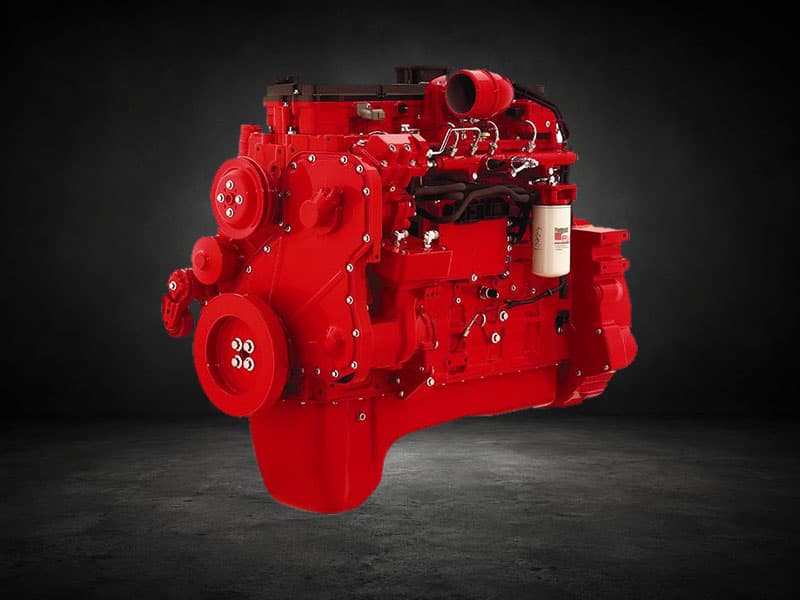
EconicSD calibration work tracks Freightliner's purpose-built refuse low-entry cab operational reality with DD8 / Cummins L9 platform behavior:
DD8 DPF derate. Standard pattern, expressed through the specific operational stress profile of side-loader refuse collection and recycling applications. DPF accumulation patterns produce derate clustering at predictable mileage thresholds depending on application severity.
DEF dosing failures on EPA 2010+ builds. Standard post-2010 pattern. EconicSD trucks accumulating mileage show DEF dosing failures, NOx sensor drift, SCR catalyst efficiency drops, and inducement countdown patterns clustering at predictable mileage thresholds.
Performance tuning and operational character improvements. EconicSD customers benefit from calibration work that delivers improved torque response, broader operating envelope at working RPM, and operational character matched to side-loader refuse collection and recycling reality.
Calibration recovery on aging ECMs. Standard recovery scope across the DD8 platform.
DD8 / Cummins L9 Calibration Approach On The EconicSD
EconicSD calibration work uses Detroit DDDL diagnostic alongside Cummins INSITE for Cummins-equipped configurations. The calibration libraries are EconicSD application-specific within the broader engine platform ecosystems — Freightliner's purpose-built refuse low-entry cab calibration approaches differ from other Freightliner platform calibrations because the operational reality differs meaningfully.
For each EconicSD customer, intake conversation centers on engine identification, application, year (critical given the wide production-era variations on legacy platforms), and operational priorities before scoping the work.
Service Paths For EconicSD Programming
Ship-in is the most common path. Pull the ECM, ship to Fort Lauderdale, 2-3 day programming turnaround. Remote programming works for shops with appropriate diagnostic software access. On-site service is available for South Florida fleet customers running EconicSD inventory.
Quotes return same business day. Tell us the year, the engine, the application, fleet size, and current operational situation. For fleet customers running multiple EconicSD trucks or mixed Freightliner inventory, multi-truck programming pricing applies.
The EconicSD In Freightliner Truck Family Context
The EconicSD draws on Freightliner's broader truck family architecture and the engine ecosystem shared across the Freightliner lineup. Our calibration work draws on the broader Freightliner platform expertise we maintain across Cascadia, Coronado, M2-106, M2-112, 122SD, 108SD Plus, 114SD Plus, Acterra, Business Class, and EconicSD applications, with calibration approaches consistent across the broader Freightliner truck family.
For fleet customers running mixed Freightliner inventory across highway tractor, vocational, and medium-duty applications, calibration approaches benefit from the consistency of our Freightliner platform expertise.
Specialty Refuse Application Considerations
EconicSD calibration work focuses on the specific operational reality of side-loader refuse collection — frequent stops with driver dismounting at every collection point, sustained low-speed operation between collection points, packer-cycle PTO duty similar to other refuse trucks but with operational pattern variations specific to side-loader work. The Detroit DD8 platform calibration approach for EconicSD applications draws on the broader DD8 application work alongside the broader refuse-fleet calibration expertise we maintain across L770, 520, LR, and similar refuse-cabover platforms. For Cummins L9-powered EconicSD configurations, calibration work uses Cummins INSITE with L9-specific calibration libraries.
Specialty Refuse Application Considerations
EconicSD calibration work draws on the broader refuse-fleet calibration expertise we maintain across L770, 520, LR, and similar refuse-cabover platforms. The refuse-cycle aftertreatment challenges are consistent across the refuse-truck population regardless of specific platform — sustained packer-cycle PTO duty, never reaching highway-cycle regen conditions, recurring DPF accumulation patterns, and the broader operational reality of refuse-fleet service. For EconicSD fleet operators dealing with batch refuse-cycle aftertreatment issues across the fleet, calibration work that addresses the root operational cause typically delivers better long-term operational economics than continuing dealer-side aftertreatment hardware replacement cycles.
Side-Loader Operational Reality And Calibration Scope
Side-loader refuse operations involve operational patterns that differ from rear-loader and front-loader configurations. The driver dismounts at every collection point, the packer cycle operates at every stop, the truck rarely reaches sustained highway-cycle operation, and the entire duty cycle reinforces patterns that aftertreatment systems weren't engineered around. EconicSD calibration approaches matched to side-loader operational reality target the specific patterns that drive recurring service issues. For EconicSD operators evaluating calibration scope, our intake conversation centers on the specific side-loader operational pattern, the fleet's accumulated mileage profile, and the specific recurring issues operators face before scoping the appropriate calibration work. The result is calibration scope that addresses actual operational reality rather than applying generic refuse-truck templates.