The MaxxForce 13's Smaller Sibling
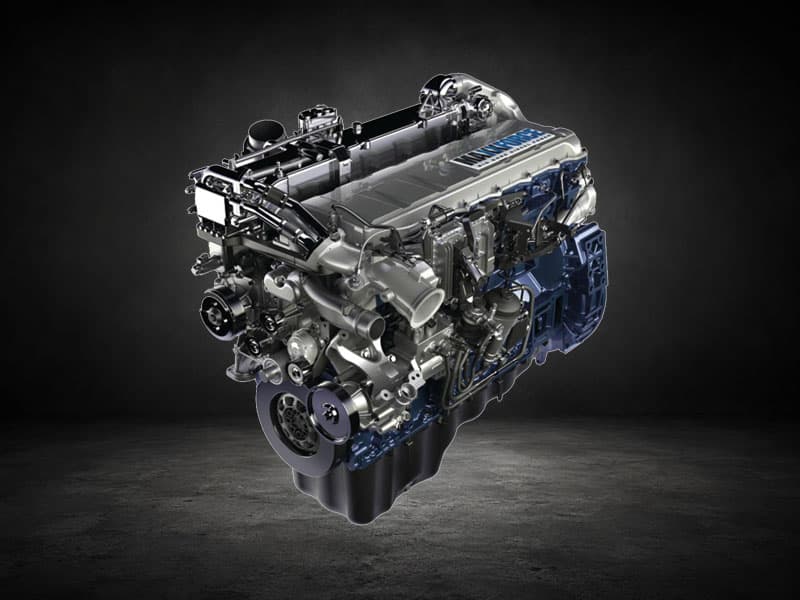
The Navistar MaxxForce 11 is the 10.5-liter inline-six that occupied the Class 8 mid-heavy slot in Navistar's MaxxForce family. Launched in 2007 and produced through 2013, the MaxxForce 11 powered International ProStar long-haul tractors, International TranStar regional fleet trucks, International PayStar heavy vocational chassis, and International 9000 series trucks. Power ratings on the MaxxForce 11 ran from 330 to 390 horsepower with peak torque from 1,150 to 1,350 lb-ft.
The MaxxForce 11 shares the troubled architectural lineage that defined the MaxxForce 13 — Navistar's bet on EGR-only emissions control (no SCR, no DEF, no urea injection) to meet EPA 2010 NOx limits through massive EGR rates rather than the SCR-plus-DPF approach every other manufacturer adopted. That bet failed across the entire upper-MaxxForce range. By 2014 Navistar had abandoned the EGR-only architecture across the family and added SCR. The MaxxForce 11 production wound down at the same time as the rest of the troubled MaxxForce lineup transitioned to the A26 platform.
Why MaxxForce 11 Trucks Come To Us
The MaxxForce 11's failure patterns largely mirror those of the more famous MaxxForce 13, scaled to the smaller displacement. The EGR-heavy architecture put extreme load on the EGR system from day one, and the patterns we see are predictable and largely unavoidable on the platform's original calibration:
EGR cooler failures at low mileage. Where most platforms see EGR cooler degradation at 400,000-500,000 miles, MaxxForce 11s often see it at 250,000 miles or earlier in heavy applications. The volume of exhaust gas being recirculated stresses the cooler beyond what the original design anticipated.
DPF clogging from extreme soot loads. The high EGR rates produce more soot in the combustion chamber than typical post-2010 engines. The DPF has to handle that load. Active regen cycles run more frequently, the filter accumulates ash faster, and derate hits earlier than on comparable Cummins or Detroit platforms.
Intake manifold and intercooler fouling. The combination of high EGR rates and soot-rich exhaust means the intake side of these engines accumulates carbon at remarkable rates. Manual cleaning is common maintenance. EGR delete eliminates the source of the fouling entirely.
Turbo issues from carbon buildup. The MaxxForce 11's turbocharger suffers from the carbon accumulation that comes with the EGR-heavy architecture. Variable geometry vane sticking, actuator faults, and premature turbo failures are more common than on other modern heavy diesels of the same era.
What Programming Can Do For The MaxxForce 11
For MaxxForce 11 trucks running export or off-road, combined EGR and DPF delete is the durable fix for the platform's fundamental aftertreatment problems. Removing the EGR system eliminates the source of the intake fouling, the cooler failures, and most of the carbon buildup that drives turbo issues. Removing the DPF eliminates the soot load triggers and the active regen cycles that further stress the system.
The result is a MaxxForce 11 that runs like the platform should have been designed to run — moderate EGR or none at all, clean intake, less soot output, and predictable maintenance. For export markets this is the standard preparation. For off-road applications it extends the useful life of trucks that would otherwise be retired early.
For on-road trucks, recalibration after hardware repair is what we do — clear inducement countdowns after sensor replacement, reset EGR commanded flow tables after cooler service, restore the calibration baseline after dealer flash failures. The aftertreatment hardware stays in place; the ECM logic gets restored to functional baseline.
ECM Identification
MaxxForce 11 trucks run Navistar-specific ECMs accessed through SAE J1939 9-pin diagnostic. The calibration architecture differs from Cummins, Detroit, and Paccar platforms — Navistar's software environment is its own ecosystem. We have calibration libraries for the MaxxForce 11 production run (2007-2013) covering both early architecture and later variants. Sending us the engine serial number, the truck VIN, and current calibration ID lets us scope the work and quote turnaround accurately.
Service Paths For MaxxForce 11 Programming
Ship-in is the most common path for MaxxForce 11 work. Pull the ECM, ship to Fort Lauderdale, 2-3 day programming turnaround, ship back. Remote programming is possible with Navistar-specific diagnostic hardware. On-site service is available for South Florida fleet customers running multiple MaxxForce 11-powered International trucks.
Quotes return same business day. Tell us the year, the truck (typically International ProStar, TranStar, PayStar), and current fault codes. For fleet customers facing the MaxxForce 11 retirement question — keep them running with calibration work, or trade them in for newer A26 platforms — we can quote either path with honest math.
For owner-operators and small fleets running MaxxForce 11 trucks, the calibration math usually favors keeping the truck. The engine block, transmission, and chassis hardware on most of these trucks are still good for several hundred thousand more miles when the aftertreatment situation is addressed properly. The combined DPF and EGR delete preparation, paired with appropriate hardware kits, removes the failure mode that drove the platform's reputation and lets the truck operate against its original mechanical capability rather than against the constraints of an emissions strategy that didn't work.