The Older Paccar-Badged Cummins B
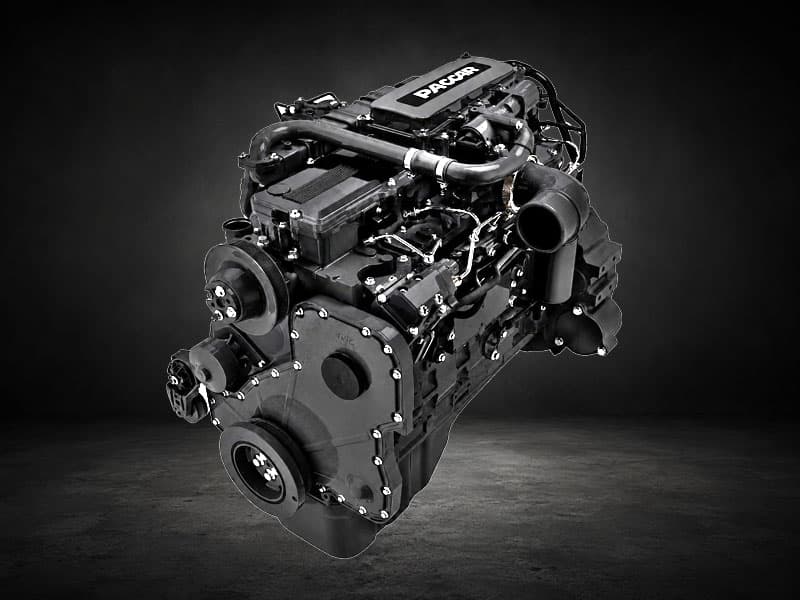
The Paccar PX-6 is the 5.9-liter inline-six Paccar marketed as its lighter medium-duty engine in Kenworth and Peterbilt Class 4-6 chassis primarily during the pre-2008 era. The PX-6 is a Cummins-built ISB 5.9 with Paccar branding — the predecessor to the 6.7-liter PX-7 platform that replaced it as the medium-duty Cummins-derived offering moved to the 6.7L displacement and the modern ISB common-rail architecture.
Power ratings on the PX-6 ran from 175 to 305 horsepower with peak torque to 660 lb-ft. The platform appeared in Kenworth T170, T270, K260, and similar lighter medium-duty chassis, and in Peterbilt 220, 270, and 330 medium-duty trucks of the pre-2008 era. Common applications included tow trucks (medium-duty wreckers), school buses, delivery trucks, smaller refuse vehicles, smaller utility trucks, and the broader lighter-medium-duty fleet.
Production largely ended around 2007-2008 when Paccar transitioned to the PX-7 (Cummins ISB 6.7) for EPA 2007 compliance. PX-6 trucks still in active service today are 17+ years old.
Why PX-6 Trucks Come To Us
Most PX-6 trucks still earning their keep today are well past the point where dealer-side service makes economic sense. The conversations we have about these trucks are usually about practical service paths for vehicles whose operational identity is established and whose owners want them to keep working:
Aging aftertreatment hardware on pre-EPA-2010 platforms. The pre-2008 PX-6 production largely predated the heavy aftertreatment requirements that followed EPA 2010. The trucks have DPF on later production years but no SCR or DEF. The aftertreatment burden is lower than later platforms, but the hardware that exists has accumulated 15+ years of service stress.
Calibration recovery on aging ECM modules. PX-6 ECMs sometimes end up corrupted or non-running after years of intermittent service. We recover most modules without replacement, which matters because dealer parts support on these aging platforms has become limited.
Performance tuning for tow and vocational service. PX-6s in medium-duty tow service and similar vocational applications benefit from calibrations matched to actual duty cycle. The underlying ISB 5.9 platform is well-characterized, and calibration approaches for all common ratings and applications are established.
Export and resale preparation. Used PX-6-powered trucks have meaningful demand in export markets and off-road resale. Calibration changes for international markets, delete preparation for off-road buyers, and ECM resets after ownership changes are routine requests.
ECM Identification
PX-6 trucks run earlier Paccar-architecture ECM modules accessible through SAE J1939 9-pin diagnostic. Calibration libraries are Paccar-specific and distinct from the contemporary Cummins ISB calibration sources for the same engine block. Sending us the truck VIN and engine serial number lets us identify the correct calibration library and quote turnaround accurately.
For some early-production PX-6 trucks, diagnostic access requires Paccar diagnostic tools rather than universal J1939 readers. Customers should expect to send the ECM in rather than attempting remote programming on these older platforms unless they have established Paccar diagnostic capability in their shop.
What We Program On The PX-6
DPF Delete For Off-Road And Export
For PX-6 trucks dedicated to off-road service or export markets, DPF delete is straightforward — the simpler pre-EPA-2010 architecture means fewer aftertreatment components to address. Calibration changes plus appropriate hardware kits eliminate the aftertreatment failure surface and let the engine run against its original performance map.
Performance Tuning For Tow And Vocational Service
PX-6s in medium-duty tow service, fire and EMS apparatus, and similar vocational applications benefit from calibrations matched to actual duty cycle. Power gains of 20-40 hp with proportional torque are typical within hardware safety margins on most rating variants.
Calibration Recovery And Module Restoration
Aging PX-6 ECMs that have stopped responding to diagnostics, modules pulled from salvage cores for transplant into other trucks, and modules that have been sitting in inventory for years can often be restored to running condition without replacement.
Service Paths For PX-6 Programming
Ship-in is the most common path for PX-6 work given the age of the platforms. Pull the ECM, ship to Fort Lauderdale, 2-3 day turnaround. Remote programming is available where customers have established Paccar diagnostic capability. On-site service is available for South Florida operators bringing trucks to us.
Quotes return same business day. Tell us the year, the chassis, the truck's primary application, and what you want out of the work. For owner-operators of single PX-6 trucks — which describes most of our PX-6 customers, given the age of these platforms — the conversation is usually practical and direct: what do you want the truck doing, and what path makes sense to get it there.
The Practical Reality Of PX-6 Service Today
Most PX-6 calls we take come from operators who have already done the cost-benefit math on truck replacement and decided to keep the PX-6 in service for specific operational reasons. Sometimes it's a tow truck whose chassis configuration fits a niche the operator can't easily replicate with new equipment. Sometimes it's a school bus operated by a charter or church organization where capital replacement is impractical. Sometimes it's a small-business medium-duty truck that's been paid for years and continues to earn its keep on routes that don't justify a new truck note.
For all of these conversations, our role is to make the calibration work practical and accessible. The PX-6 is old enough that some shops have stopped supporting it — parts availability is thinner than newer platforms, calibration libraries require specific historical knowledge, and the diagnostic procedures aren't always documented in standard service references. We've kept our PX-6 capability current because the trucks that need it deserve the same support that newer platforms get.