The Light Medium-Duty MaxxForce
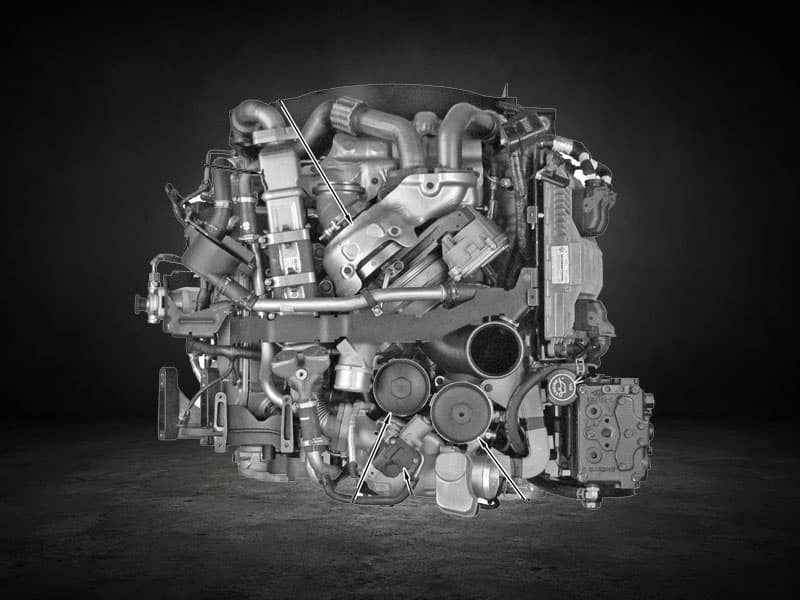
The Navistar MaxxForce 7 is the 6.4-liter V8 that anchored the lighter end of the MaxxForce family. Launched in 2007 and produced through 2014, the MaxxForce 7 served the Class 4-6 medium-duty market — International DuraStar 4300, International TerraStar, smaller International medium-duty configurations, and IC Bus chassis for school transportation. Power ratings on the MaxxForce 7 ran from 200 to 300 horsepower with peak torque to 660 lb-ft.
The MaxxForce 7 shares architectural ancestry with the Ford 6.4L Power Stroke (both engines were developed during the Navistar-Ford partnership era), though Navistar's calibration and operational positioning differed from Ford's. The platform's reputation has been mixed — it inherited some of the troublesome architecture characteristics that affected the larger MaxxForce family, though without the catastrophic EGR-only emissions strategy that defined the MaxxForce 13.
Why MaxxForce 7 Trucks Come To Us
The MaxxForce 7's failure patterns center on the medium-duty vocational duty cycle combined with the platform's known architectural characteristics:
DPF derate on urban delivery and vocational service. MaxxForce 7-powered trucks doing urban delivery, refuse collection, school bus routes, or similar short-cycle duty rarely give the DPF sustained passive regen temperatures. Active regen cycles trigger constantly without completing. Soot accumulates, ash loading builds, and derate hits in the 150,000-300,000 mile window depending on application severity.
EGR cooler failures and intake fouling. Standard MaxxForce family pattern at moderate severity. The combination of EGR rates and combustion characteristics produces intake-side soot accumulation that requires either physical cleaning or EGR delete by 200,000-300,000 miles in heavy applications.
Injector and fuel system issues. The MaxxForce 7's high-pressure fuel system has shown patterns of injector and fuel pump issues at moderate mileage. These aren't strictly calibration issues, but the related ECM logic sometimes fails to handle hardware-degradation gracefully, producing fault cascades that don't correspond to actual catastrophic failure.
ECM calibration corruption. Navistar ECM software has been through multiple revisions during MaxxForce 7 production. Some revisions have created calibration corruption patterns that we recover from regularly.
ECM Identification
MaxxForce 7 trucks run Navistar-specific ECM architecture accessed through SAE J1939 9-pin diagnostic. The calibration libraries are MaxxForce 7-specific within Navistar's broader software ecosystem. Sending us the truck VIN, engine serial number, and current calibration ID lets us scope the work and identify the correct calibration library before any quote.
For MaxxForce 7 customers, we also ask about whether the truck is pre-2010 (EPA 2007 architecture) or post-2010 (EPA 2010 architecture with SCR/DEF where applicable), because the calibration approach differs between architectures.
What We Program On The MaxxForce 7
Combined DPF + EGR Delete (Off-Road & Export)
For MaxxForce 7 trucks dedicated to off-road service or export markets, combined delete eliminates the aftertreatment failure surface. Calibration is rewritten so the ECM stops expecting DPF and EGR systems to be present, paired with appropriate hardware kits for the application.
Emissions Recalibration (On-Road Service)
For MaxxForce 7 trucks staying compliant in on-road service, recalibration after aftertreatment hardware repair restores normal operation. Clears inducement countdowns, resets DEF dosing parameters (on post-2010 builds), restores SCR efficiency tracking.
Calibration Recovery
MaxxForce 7 modules corrupted after failed dealer flashes can usually be restored without replacement.
Fleet Programming
School districts, municipal fleets, and small-fleet operators with batches of MaxxForce 7-powered International medium-duty trucks work with us across multiple trucks. Fleet pricing applies.
Service Paths For MaxxForce 7 Programming
Ship-in is the most common path. Pull the ECM, ship to Fort Lauderdale, 2-3 day turnaround. Remote programming works for shops with Navistar diagnostic software. On-site service is available for South Florida fleet customers.
Quotes return same business day. Tell us the year, the chassis (DuraStar 4300, TerraStar, IC Bus), current fault codes, and the truck's primary application. For fleet customers facing the MaxxForce 7 reliability question — keep them running with calibration work, or trade them in for newer platforms — we can quote either path with honest expectations about what each delivers.
For owner-operators and small businesses running MaxxForce 7 trucks, the calibration math usually favors keeping the truck. The engine block, transmission, and chassis hardware on most of these trucks are still good for several hundred thousand more miles when the underlying aftertreatment issues are addressed properly.
The Power Stroke Connection
The MaxxForce 7 and the 2008-2010 Ford 6.4L Power Stroke share architectural ancestry from the Navistar-Ford partnership era. The Ford-branded version of the platform earned a difficult reputation for reliability that's well-documented in the F-350 and F-450 owner community. The MaxxForce 7 inherited many of those characteristics but was calibrated and packaged for Navistar's medium-duty applications rather than Ford's pickup market. Understanding this shared lineage helps explain why some of the failure patterns we address on MaxxForce 7 trucks have parallels in the Power Stroke community — the underlying engine architecture is closely related, even if the applications and calibration philosophies differ.
For shop owners and operators familiar with the 6.4L Power Stroke service patterns, much of that operational knowledge translates to MaxxForce 7 work. The diagnostic approach is different (Navistar vs. Ford diagnostic ecosystems), but the underlying hardware patterns are recognizable.