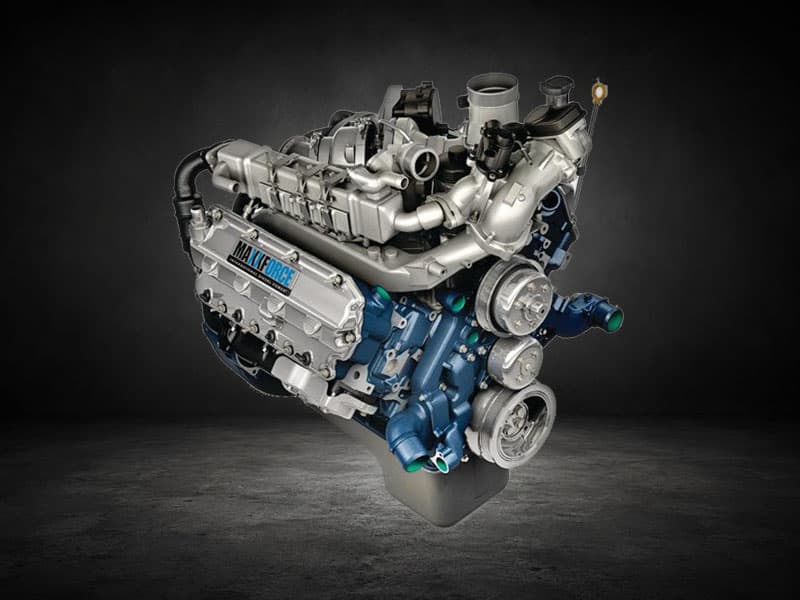
The Mid-Heavy MaxxForce
The Navistar MaxxForce 10 is the 10.0-liter inline-six that sat between the MaxxForce 9 and MaxxForce 11 in Navistar's medium-heavy vocational lineup. Launched in 2007 and produced through 2013, the MaxxForce 10 powered International WorkStar 7600, International 7300/7400 series, and a range of medium-heavy vocational International chassis. Power ratings on the MaxxForce 10 ran from 310 to 370 horsepower with peak torque from 950 to 1,150 lb-ft.
The MaxxForce 10 occupied an interesting position in the Navistar lineup — heavier than the MaxxForce 9 for trucks that needed more capability, lighter than the MaxxForce 11 for vocational applications that didn't need Class 8 power. The platform appeared most often in heavy dump truck configurations, large vocational chassis, and specific WorkStar applications where the duty cycle justified the additional displacement.
Why MaxxForce 10 Trucks Come To Our Bench
MaxxForce 10 calibration work shares failure patterns with the MaxxForce 9 but with additional vocational duty cycle stress driven by the platform's typical heavy applications:
DPF clogging on short-cycle vocational duty. Dump trucks doing short hauls between quarry and job site, heavy refuse trucks running residential routes, and similar vocational MaxxForce 10 applications never let the DPF reach sustained passive regen temperatures. Active regen cycles trigger constantly. The cycles often don't complete because the truck shuts down between jobs. Soot accumulation builds steadily, and derate hits earlier than highway operation would predict.
EGR cooler degradation. Standard MaxxForce family pattern, intensified by the heavier duty cycle the MaxxForce 10 typically serves. Coolant intrusion into intake, intermittent fault codes, eventual catastrophic failure.
Heavy intake soot accumulation. The combination of EGR rates and vocational duty cycle on the MaxxForce 10 produces intake-side soot accumulation that requires either physical cleaning or EGR delete by 200,000-300,000 miles in heavy applications.
Calibration corruption on aging ECMs. Navistar ECM software revisions during MaxxForce 10 production have created calibration corruption patterns that we recover from regularly.
ECM Identification
MaxxForce 10 trucks run Navistar-specific ECM architecture accessed through SAE J1939 9-pin diagnostic. The calibration libraries are MaxxForce 10-specific within Navistar's broader software ecosystem. Sending us the truck VIN, engine serial number, and current calibration ID lets us scope the work and identify the correct calibration library before any quote.
For MaxxForce 10 customers, we also ask about whether the truck is pre-2010 (EPA 2007 architecture) or post-2010 (EPA 2010 architecture with SCR/DEF), because the calibration approach differs between architectures.
What We Program On The MaxxForce 10
Combined DPF + EGR Delete (Off-Road & Export)
For MaxxForce 10 trucks dedicated to off-road service — dedicated construction site work, oilfield support, dedicated quarry operations — combined delete eliminates the aftertreatment failure surface entirely. Standard preparation for export-bound MaxxForce 10 trucks as well.
Emissions Recalibration (On-Road Vocational)
For MaxxForce 10 trucks staying compliant in on-road vocational service, recalibration after aftertreatment hardware repair restores normal operation. Clears inducement countdowns, resets DEF dosing parameters (on post-2010 builds), restores SCR efficiency tracking.
Calibration Recovery
MaxxForce 10 modules corrupted after failed Navistar dealer reflashes can usually be restored without replacement.
Fleet Programming
Construction fleets, refuse operations, and municipal fleets running batches of MaxxForce 10-powered International trucks typically work with us across multiple trucks. Fleet pricing applies.
Service Paths For MaxxForce 10 Programming
Ship-in is the most common path. Pull the ECM, ship to Fort Lauderdale, 2-3 day turnaround. Remote programming works for shops with Navistar diagnostic software. On-site service is available for South Florida fleet customers running multiple MaxxForce 10 trucks.
Quotes return same business day. Tell us the year, the chassis, current fault codes, and the truck's primary application. For construction fleet customers facing the MaxxForce 10 reliability question on aging vocational trucks, we walk through the practical math — calibration cost vs. continued dealer-side aftertreatment maintenance vs. capital replacement — and let the operational decision drive the calibration approach.
For dealer and broker partners moving used International medium-heavy inventory, delete preparation for export and off-road buyers is routine work. NDAs are standard, and recurring relationships typically batch programming work efficiently across inventory cycles.
The MaxxForce 10 In Vocational Context
The MaxxForce 10 trucks still in service today are typically in fleet operations that purchased them new during Navistar's late-2000s and early-2010s production window. By the time these trucks reach the calibration conversation, the fleet has usually been through several rounds of dealer-side aftertreatment service and the operational economics are starting to break down. The recurring cost per truck event, multiplied across a fleet of ten or twenty vocational International trucks, becomes the operational pain point that pushes fleet operators toward seeking alternatives to the standard dealer service path.
For construction fleets specifically, the MaxxForce 10 conversation often centers on project schedule pressure — a truck that's down for two weeks of dealer aftertreatment service is a truck that's not on the job site producing revenue. Calibration work that removes the recurring failure mode addresses the underlying cause of the schedule disruption, and the math typically favors that path once the fleet has experienced enough service events to see the pattern.